
Oncology diagnosis of breast cancer influences physical and emotional health. Patients need constant assistance besides medical care to cope with the symptoms and heal. Nursing care for breast cancer patients is important in the treatment to alleviate pain, provide emotional support, and improve the overall quality of life during the treatment course.
This approach to care aligns with the values followed by Gracias Living senior care overview, where patient comfort and long-term well-being are prioritized.
What Is Nursing Care for Breast Cancer Patients?
Nursing Care for Breast Cancer Patients is a notion that means the continuous medical and emotional guidance of trained nurses at the stages of diagnosis, treatment, and recovery. It is aimed at symptom management, complexity prevention, mental health support, and patient adaptation to changes in normal living with breast cancer and treatment of breast cancer.
Definition and Overview
Nursing care of breast cancer patients is a planned clinical and supportive care given by trained nurses to breast cancer patients during the diagnosis, treatment, and recovery. It involves wound management, patient education, emotional support, and symptom management. This care could be provided either in the hospitals, clinics, or at home, depending on the medical status of the patient and personal choice.
Goals of Nursing Care
Nursing support is the key objective of nursing care for breast cancer patients to ensure the recovery process as well as enhance comfort, safety, and emotional well-being during the treatment. Nursing care revolves around curing as well as psychological assistance to improve the quality of life.
- Pain relief and discomfort during treatment.
- Infection and complications of treatment prevention.
- Helping with the well-being, emotionally, and psychologically.
- Facilitating physical and emotional healing recovery.
- Safe self-care education for patients.
- Enhancing the treatment quality of life.
Nursing Assessment for Breast Cancer Patients
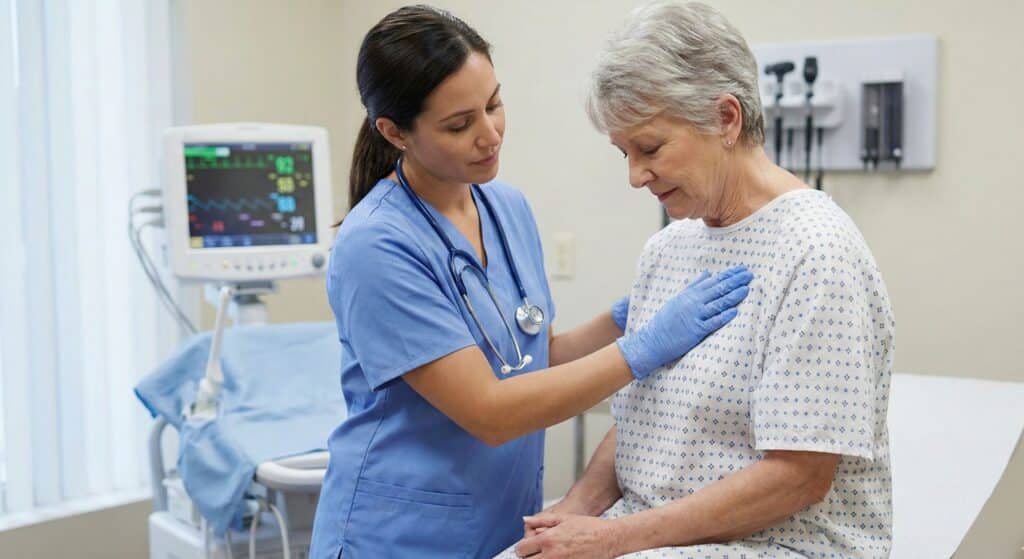
The initial step that is vital in the planning of effective care is nursing assessment. It will assist nurses to know the physical status, emotional level, nutritional requirements, and the level of knowledge of the patient. Care is individualized and responsive as opposed to being routine as a result of a comprehensive assessment.
The evaluation procedure is a combination of the subjective data provided by the patient and the objective notes of the nurse. The insights will inform decision-making in the process of the care plan and aid in measuring progress over time.
A holistic assessment approach is commonly followed in geriatric care services for holistic health support, where physical, emotional, and nutritional needs are evaluated together.
Key Assessment Areas
Physical Assessment
- Pain level and location
- Fatigue and weakness
- Healing and wound condition.
- Side effects of chemotherapy or radiation.
Emotional Assessment
- Diagnostic-related anxiety or fear.
- Signs of depression or emotional withdrawal
- Stress levels and coping ability.
Nutritional Assessment
- Appetite changes
- Weight fluctuations
- Hydration status
- Ability to tolerate food
Knowledge Assessment
- Knowledge of treatment and drugs.
- Consciousness of self-care measures.
- Capability to identify red flags.
Extensive analysis will enable the nurses to Extensive analysis will enable the nurses to create an effective personalized nursing care plan that will indeed address the needs of the individuals.
Common Nursing Diagnoses in Breast Cancer Care
One of the problems that breast cancer patients have to cope with is that of having several issues simultaneously. Nurses detect nursing diagnoses based on the results of assessment, which priorities and interventions. These diagnoses are centered not on the disease but on the reaction of the patient.
The typical nursing diagnoses comprise physical discomfort, emotional distress, and lifestyle disruptions. Early detection of them prevents complications and assists in a more fluid recovery.
According to the National Institute of Health, early identification of nursing diagnoses such as pain, infection risk, anxiety, and nutritional imbalance is critical for preventing complications and improving recovery outcomes in breast cancer patients.
Common Diagnoses
- Acute Pain
Associated with the effects of surgery, radiation, or chemotherapy. - Risk for Infection
As a result of the suppressed immunity or surgical incisions. - Anxiety and Fear
Linked to diagnosis, therapeutic ambiguity, or relapse. - Imbalanced Nutrition
Brought about by nausea, loss of appetite, or a change in taste. - Disturbed Body Image
After a mastectomy, loss of hair or physical alterations.
The diagnosis of these conditions is a fundamental issue in proper nursing to treat breast cancer patients.
Key Nursing Interventions for Breast Cancer Patients
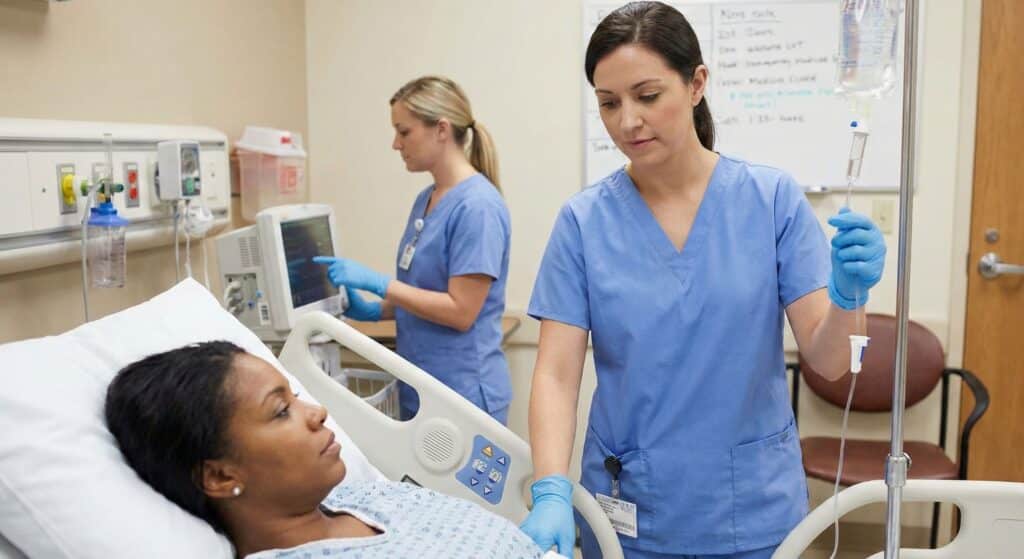
Nursing interventions consist of feasible steps that are implemented to control symptoms, complications, and recovery. These treatment measures are constantly tailored according to patient reaction and level of treatment.
Many of these comfort-focused interventions align with Palliative care services for advanced treatment support.
Pain Management
Managing pain is a priority in breast cancer management, particularly after surgery or in aggressive treatments. Nurses constantly evaluate the level of pain and administer appropriate pain relief in order to enhance comfort and mobility.
Pain management interventions include:
- Prescription of painkilling drugs.
- Measuring the intensity and response of pain.
- Relaxation and positioning.
- Patient education in relation to pain reporting.
- Healing and emotional stability are provided through effective pain control.
Infection Prevention
Infection prevention is essential among patients who have low immunity. Nurses pay closer attention to wounds and teach hygiene measures to the patients.
Infection prevention interventions include:
- Wound care: sterile maintenance.
- Infection surveillance: fever or redness.
- Educating on hand hygiene
- Promotion of early symptom reporting.
- Moral Support and Counseling.
Emotional Support and Counseling
Emotional distress is usually accompanies breast cancer. It is through the continuous emotional support of the patients by the nurses.
Emotional well-being is equally important, as highlighted in understanding dementia care and quality of life, where mental health support significantly impacts patient outcomes.
Emotional support includes:
- Active listening and encouraging.
- Emotional validation
- Promoting the sharing of fears.
- When necessary, refer to counseling.
Nutritional Support
Nutrition is critical in terms of recovery and treatment tolerance. Nurses assist in dietary difficulties that are brought about by treatment.
Nutritional interventions include:
- Promoting small but regular meals.
- Treating nausea and weight loss.
- Checking the weight and the hydration.
- Communicating with dietitians.
Maintaining proper nutrition during treatment aligns with principles discussed in nutrition and wellness in elderly care, where diet plays a crucial role in recovery and overall strength.
Patient Education and Self-Care Guidance
Patient education empowers patients to manage their recovery effectively. Nurses give direct, straightforward instructions on day-to-day care.
Education focuses on:
- Medication management
- Wound care techniques
- Lifestyle adjustments
- Recognizing warning signs
Home Nursing Care Services for Breast Cancer Patients
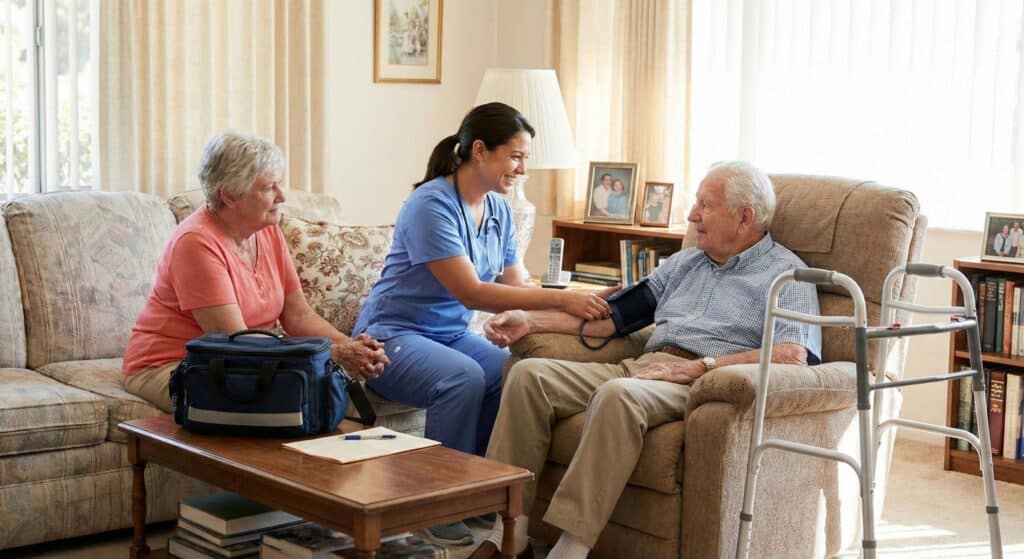
Home-based care provides comfort, privacy, and continuity for patients who recover at home. Home nursing services are an opportunity to obtain professional care without the pressure of constant visits to the hospital.
These services are more useful in cases of elderly patients, patients with reduced mobility, and long-term treatment. Nurses make frequent visits to check the health of the patients, to manage the symptoms, and to offer emotional support.
Home nursing care can consist of:
- Post-surgical and wound dressing.
- Medication administration
- Pain and symptom monitoring
- Help with the daily activities.
- Emotional reassurance
Home-based professional nursing care enhances comfort in many families and medical safety.
This growing preference for care outside hospitals mirrors the rise of assisted living options in senior care across India.
Evaluation of Nursing Care Effectiveness
Evaluation makes sure that the nursing intervention is yielding positive results. The nurses will check patient progress on a regular basis and modify patient care plans.
Evaluation focuses on:
- Pain reduction
- Wound healing progress
- Emotional well-being
- Nutritional improvement
- Patient knowledge and satisfaction.
Interventions are changed in case the goals are not achieved. Ongoing assessment makes nursing care responsive, effective, and patient-centered.
Why Choose Gracias for Nursing Care
Gracias is a professional nursing care facility providing services that are specific to cancer patients. Our nurses consider comfort, safety, and emotional support regardless of whether the care delivery is at home or in the clinics.
Why families trust Gracias:
- Qualified and caring nurses.
- Personalized care plans
- The availability of home nursing support.
- Emotional and physical caring attention.
- Patient-first approach
Conclusion
Treatment of breast cancer cannot be done solely through medical care but through compassion, patience, and professional assistance. Nursing care is an area that fills the gap between clinical treatment and human relationships. Nurses assist patients to recover honorably and with self-confidence through examination, therapy, training, and emotional encouragement.Consistent and empathetic Nursing Care to Breast Cancer Patients transforms into a potent recovery tool and a well-being pillar in the long term.
Frequently Asked Questions (FAQ)
What is nursing care for breast cancer patients?
It is distinct attention that helps with physical restoration, mental wellness, and daily life necessities prior to and following breast cancer therapy.
How do nurses help after surgery?
Their role is to handle pain, care for wounds, prevent infections, aid mobility, and provide emotional reassurance.
Can nursing care be provided at home?
Yes, educated nurses will be able to deliver safe and effective care at home depending on the patient’s requirements.
How do nurses support emotional well-being?
By means of counseling, reassurance, active listening, and referrals to a mental health professional.
What is the role of nutrition in nursing care for breast cancer patients?
Nutrition promotes recovery, resistance, and tolerance of treatment, thus being one of the major areas of nursing practice.