
Quick Answers:
- What is music therapy for dementia? Music therapy uses familiar songs, rhythm, and guided musical activities to improve memory, mood, communication, and emotional well-being in dementia patients.
- Why does it matter? Music activates areas of the brain linked to long-term memories and emotions, helping reduce anxiety, agitation, and social withdrawal.
- Who benefits from music therapy? Seniors living with Alzheimer’s disease, dementia, memory loss, or cognitive decline benefit from music therapy.
- How does music therapy help? Regular music sessions encourage communication, stimulate memory, improve emotional expression, promote social interaction, and create moments of comfort and joy.
- What should families look for? Choose a dementia care home that offers personalised music therapy, trained caregivers, structured activities, and an engaging environment that supports cognitive and emotional well-being.
- Why trust Gracias Living? Gracias Living integrates meaningful therapies, such as music and cognitive stimulation, with care plans to provide dementia care for seniors.
Music therapy for dementia is a proven, non-drug approach that helps improve memory, reduce anxiety, encourage communication, and enhance emotional well-being. Familiar songs and personalised music create meaningful moments that reconnect seniors with memories, emotions, and the people around them.
Music activates brain regions that often remain responsive even as dementia progresses. Familiar songs trigger long-term memories, reduce agitation, improve mood, and encourage conversation. Regular music therapy sessions support cognitive stimulation, emotional expression, and social engagement, making everyday life more meaningful for seniors living with dementia.
Dementia – a dreadful illness; people may have difficulty communicating, remembering, and managing their emotions.
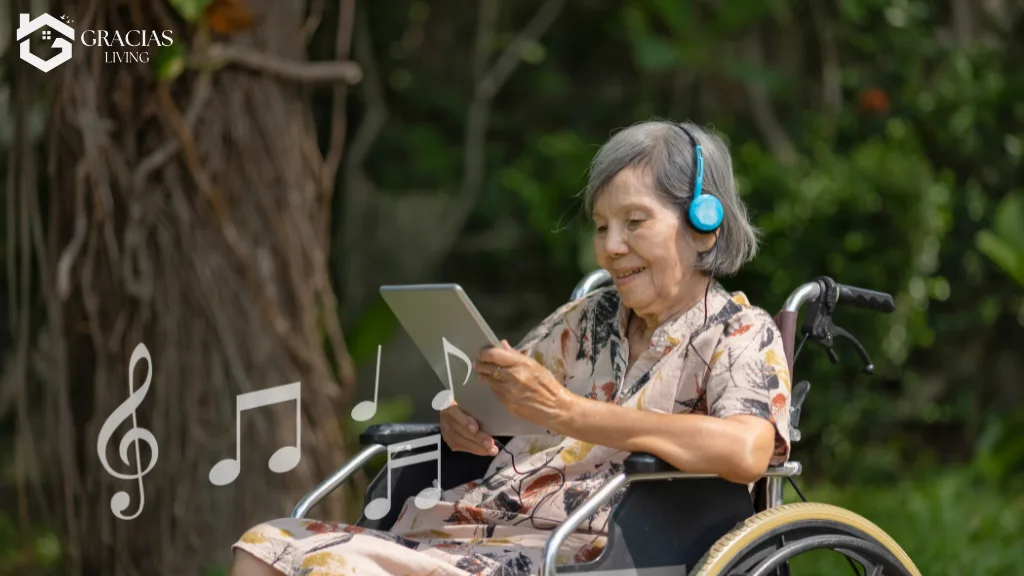
Music therapy for dementia: Music has the power to reach memories that dementia cannot erase. Music therapy for dementia helps seniors reconnect with familiar moments, express emotions, reduce anxiety, and improve communication. It is one of the most effective non-drug therapies for enhancing emotional well-being and quality of life.
What is music therapy dementia?
Music therapy for dementia is a structured therapeutic approach that uses familiar music, singing, rhythm, and musical activities to improve memory, communication, mood, and emotional well-being in people living with dementia. It is a non-drug therapy delivered by trained professionals as part of a comprehensive dementia care plan.
Music stimulates areas of the brain linked to long-term memory, emotion, and movement. Even as dementia progresses, familiar songs often help seniors reconnect with memories, express emotions, and engage with the people around them.
Research shows that music therapy reduces anxiety, agitation, and social withdrawal while improving cognitive stimulation and quality of life. Families increasingly choose dementia care homes that include music therapy as part of a personalised care program.
With people who have Alzheimer’s disease or another form of dementia, including Lewy Body Dementia, it might be a favorite song, or singing, or a movement like playing a musical instrument, or another piece of movement with rhythm, which can bring huge change in behavior and anxiety levels.
Regular music therapy reduces anxiety, calms agitation, improves mood, and encourages communication. Singing, clapping, gentle movement, and listening to favourite songs help seniors express emotions, stay socially engaged, and participate more actively in daily life.
Such mini musical moments at an assisted living home or home can bring joy and connection for seniors with dementia. It soothes emotions such as restlessness and anxiety, and can stimulate recall in a person and bring back memories and relationships.
How Does Music Therapy Improve Memory and Emotional Well-Being?
The benefits of music are considered to be an impactful activity for dementia patients and are vast and deeply rooted in research. It also offers cognitive abilities that can improve memory recall and attention.
A 2023 review in Alzheimer’s Research & Therapy found that music therapy significantly improved memory, attention, and verbal fluency in Alzheimer’s patients compared to control groups.
You hear a song that reminds you of a song you loved when you loved it, time and place, and the image and sound is powerful enough to deliver real-live reminiscence and feeling that links you to who you are and who you once were.
Musical memories are often encoded in a part of the brain distinct from verbal memory, and happen to be easier to pull out of long-term storage.
And let’s just say the connection between music therapy and cognition, emotional health, social health (and therapy)? Goes DEEP.
It is also soothing, and there is evidence that it can reduce agitation, anxiety, and even depression. Playing music with others is also a great way to increase social contact and community, so it can help with reducing feelings of isolation.
Music is inspirational and brings people together, especially to play in a group. It can be a much-needed balm against boredom, a way to tamp down anxiety and depression.
How Does Music Therapy Work for People with Dementia?
Music therapy works by stimulating areas of the brain responsible for memory, emotions, language, and movement. Even as dementia progresses, many people continue to recognise familiar songs because musical memories often remain preserved longer than other types of memory.
Listening to familiar music activates positive emotions, reduces anxiety, and encourages communication. Singing, clapping, rhythmic movement, and guided music sessions help seniors stay engaged, express their feelings, and participate more actively in daily life.
When people listen to familiar music, it activates different parts of the brain responsible for memory, language, emotions, and movement. Even when dementia affects thinking and communication, musical memories often remain intact. This is why a familiar song can trigger memories, encourage conversation, reduce anxiety, and bring comfort.
This connection between music and memory is especially important for individuals with dementia Patients. And even if the brain can no longer recall new events, it seems to be able to link to that music. It allows them to really see and commune.
Music stimulates the cerebral cortex, which supports memory and language, and the limbic system, which controls emotions. This unique response helps people living with dementia recall familiar memories, express emotions, and stay connected with the people around them.

The Science Behind Music’s Impact
Music activates multiple areas of the brain at the same time, including those responsible for memory, emotions, language, and movement. Unlike many other cognitive functions, musical memories often remain preserved even as dementia progresses. This is why familiar songs can trigger emotions, conversations, and long-forgotten memories.
When a person listens to familiar music, the brain processes sound through the auditory cortex while the limbic system responds to emotions and memories. These brain regions work together to create emotional connections that help people living with dementia recognise loved ones, recall meaningful experiences, and feel more engaged with their surroundings.
Dementia gradually affects short-term memory and thinking skills, but the brain’s response to familiar music often remains strong. Music creates an alternative pathway to access memories that may no longer be reached through conversation alone. This explains why many seniors can sing along to songs from their childhood even when they struggle to remember recent events.
This unique response makes music therapy an important part of personalised dementia care. Regular music sessions reduce anxiety, improve mood, encourage communication, and create meaningful moments of connection between seniors, their families, and caregivers.
The rhythmic aspects of music also engage the motor cortex, said David Levitin, a cognitive simulation psychologist at McGill University in Montreal, which explains why someone who can’t walk can still tap his or her feet or move to the beat. Those with dementia, especially in different stages of dementia, listening to songs can provide an alternate route to access not only that person, but also memories that couldn’t be reached.
Where Music And Memory Meet In The Brain?
The strange connection between music and memory. It’s an odd little bit of neuroscience. Whalen adds:
“The area of the brain that retrieves musical memories is one of the last to be affected by Alzheimer’s-related memory loss.”
This could also be that information about the music is being elaborated and encoded into a large network of brain regions that are not as devastated by the disease. By way of analogy, it can be a kind of bypass, connecting injured areas of the brain to more primitive routes of memory or emotion.
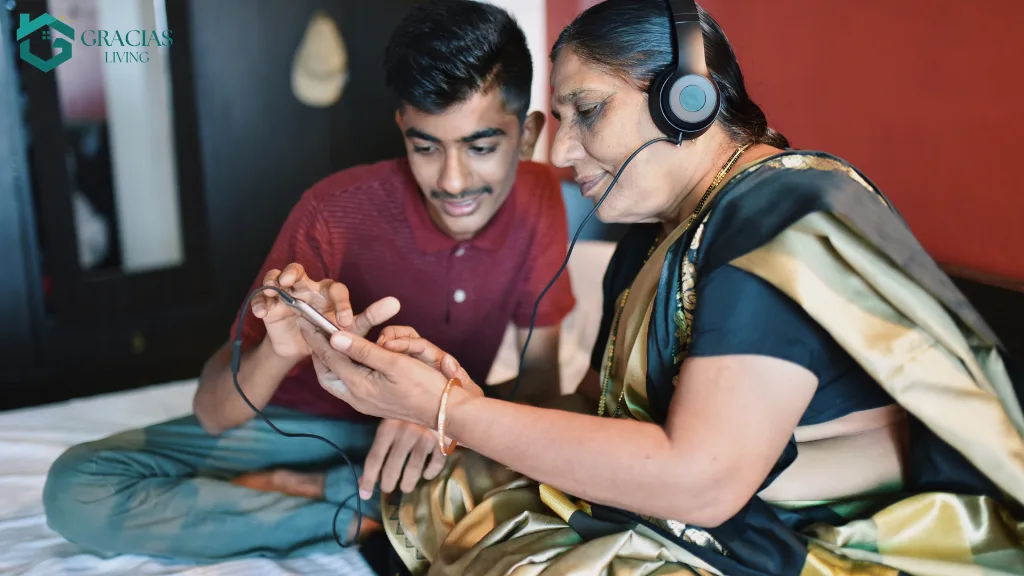
That’s why the same person who can no longer speak can still sing to you a much-loved tune and can remember not just the tune, but also the era in which he grafittied his identity alongside it to as near it as plays on the radio before fading out.
How does music affect the brain and dementia?
The human brain processes music differently from ordinary speech. While dementia gradually damages areas responsible for short-term memory and reasoning, the brain’s response to rhythm, melody, and familiar songs often remains preserved for much longer. This allows music to reach parts of the brain that everyday conversations may no longer access.
Music activates several brain networks at the same time instead of relying on a single memory centre. It stimulates hearing, emotions, movement, and long-term memory together. This widespread brain activity explains why many people living with dementia can remember song lyrics, tap their feet to a familiar rhythm, or sing along even when they struggle with daily conversations.ain.
This unique brain response helps caregivers build meaningful daily routines. A favourite morning song can encourage a senior to wake up calmly. Gentle music during meals may improve focus. Relaxing melodies before bedtime can create a more peaceful environment. Music becomes a practical care tool rather than simple entertainment.
What Music Is Most Soothing to Patients With Dementia?
Studies show that the type of music that usually works best for people with dementia is what they listened to when they were young or what comes from their past and is meaningful to them personally.
That can be anything from tunes they grew up with in their teens and early 20s, to songs that bring specific memories or experiences to mind. The genres are flexible, from classical and jazz to rock and folk music.
Consider the user’s taste in music and what they can’t stand: “What might be calming for me could make someone else feel super jumpy. So always use music which relates to your loved ones, their music, their melodies, their tunes.
Music therapy dementia in Care Homes
Music therapy is gradually being utilized in assisted living and nursing homes and senior housing. It’s something productive for residents to do, and it breaks up the day.” They have group sing-alongs, concerts, and one-on-one sessions with a music therapist in care homes.
Music is often used as a medium to uplift, to engage people, to encourage social interaction, and to feel that one is being cared for at home.
How Families Can Use Music Therapy at Home
Families can use music as a simple and meaningful way to support a loved one with dementia. Familiar songs create comfort, encourage communication, reduce anxiety, and make everyday life more enjoyable. A few minutes of their loved music each day can strengthen emotional connections and improve the overall care experience.
Make Playlists
Choose songs that your loved one enjoyed during their teenage years and early adulthood. Include devotional music, old Bollywood classics, regional songs, folk music, or favourite family recordings. Familiar music creates a sense of comfort, triggers positive memories, and encourages emotional engagement.
Time It Right
Match the music to the daily routine. Play calm music during meals, relaxing melodies before bedtime, or energetic songs during exercise and group activities. The right music at the right time helps create structure, reduces agitation, and supports a peaceful daily routine.rnings.
Encourage Singing and Gentle Movement
Invite your loved one to sing along, clap, tap their feet, or move gently to the rhythm. These simple activities improve participation, encourage physical movement, and create joyful moments without adding pressure or stress..
Observe Their Response
Every person responds to music differently. Notice which songs bring comfort, encourage conversation, or improve mood, and update the playlist regularly based on their preferences. Personalised music creates the greatest therapeutic benefit and joy, not more pressure.
How to Choose the Right Music for Someone Living with Dementia
Not every type of music creates the same response in people living with dementia. The most effective music is familiar, meaningful, and personally connected to the individual’s life experiences. Choosing the right songs makes music therapy more engaging, comforting, and beneficial.
Key points
- Choose songs from their teenage and early adult years.
- Include devotional, regional, or favourite Bollywood music.
- Avoid loud, fast, or unfamiliar music that may confuse.
- Observe their response and update playlists based on what brings comfort and joy.
What Type of Music Is Best for People Living with Dementia?
The success of music therapy depends on choosing music that is familiar, meaningful, and personally connected to the individual’s life. The right songs can unlock memories, create emotional comfort, encourage communication, and reduce anxiety. Personalised music transforms a simple listening session into a meaningful therapeutic experience.
What to Look For
Choose Familiar Music
Select songs your loved one enjoyed during their teenage years and early adulthood. Music from this stage of life often creates the strongest emotional and memory connections.
Include Personal and Cultural Preferences
Play devotional songs, regional music, old Bollywood classics, ghazals, folk songs, or family favourites that hold personal meaning. Familiar music helps seniors feel safe, comfortable, and emotionally connected.
Avoid Overstimulation
Loud music, fast beats, or unfamiliar songs may increase confusion or agitation in some people living with dementia. Calm, familiar, and soothing music usually creates the best response.
Observe and Personalise
Every person responds differently to music. Watch their facial expressions, mood, and engagement during each session. Continue playing songs that bring comfort, encourage participation, and create positive emotional responses.
Music therapy works best when it is personalised rather than standardised. A carefully chosen playlist reflects a person’s memories, culture, language, and life experiences. This personal connection makes music therapy more meaningful, more comforting, and more effective for people living with dementia.
Frequently Asked Questions (FAQ)
Does music therapy really help people with dementia?
Yes. Music therapy improves emotional well-being, reduces anxiety, encourages communication, stimulates long-term memories, and enhances quality of life. It is widely recognised as an effective non-drug therapy for people living with dementia.
What type of music works best for dementia patients?
The best music is familiar and personally meaningful. Old Bollywood songs, devotional music, regional songs, ghazals, folk music, and favourite family recordings often create the strongest emotional and memory connections.
At what stage of dementia should music therapy begin?
Music therapy can benefit people at every stage of dementia. Starting early helps build positive routines, while continued music therapy supports emotional comfort, engagement, and communication as the condition progresses.
Can families use music therapy at home?
Yes. Families can create personalised playlists, play music during meals or relaxation, encourage singing, and observe which songs create comfort and positive engagement. Consistency and familiarity produce the best results.
How often should a person with dementia participate in music therapy?
Most seniors benefit from regular music sessions several times a week or as part of their daily routine. The frequency depends on individual needs, preferences, and responses, and the best results come from consistent, personalised sessions.
Is music therapy a replacement for medical treatment?
No. Music therapy complements medical care and personalised dementia care. It improves emotional well-being and daily engagement while working alongside medical treatment, nursing care, and rehabilitation.