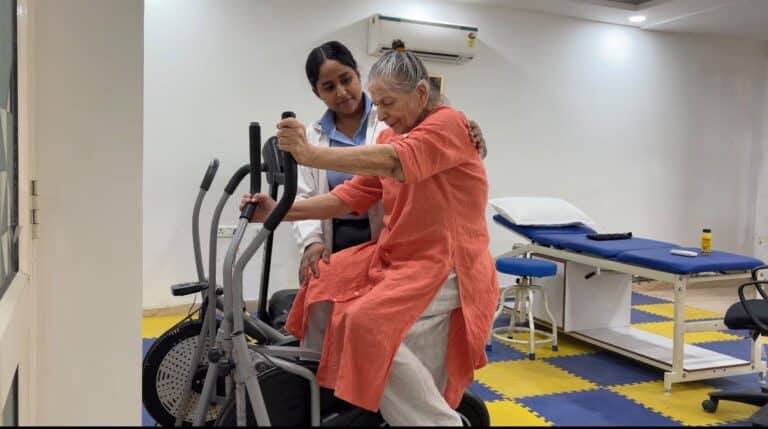

My parent has dementia. What happens next?
The stages of dementia help families understand how the condition progresses over time. Knowing what to expect at each stage can make it easier to recognise changing symptoms, plan future care, and provide the right support for a loved one living with dementia.
A dementia diagnosis often leaves families asking, “What happens next?” While every person’s journey is unique, dementia usually progresses through different stages that affect memory, thinking, communication, and independence over time.
📅 Last Updated: July 2026
✍️ Written by: Meenakshi Dawar
👨⚕️ Medically Reviewed by: Dr. Vishal Siwach
📝 Editorially Updated by: Gracias Living Editorial Team
What Are the Stages of Dementia?
The stages of dementia describe how symptoms gradually change over time. As dementia progresses, a person’s memory, thinking, communication, behaviour, and ability to perform everyday activities become increasingly affected. Understanding these stages helps families recognise changing care needs and prepare for the future with greater confidence.
At a Glance
| Stage | What Happens |
|---|---|
| Early | Mild memory problems and subtle thinking changes |
| Middle | Increasing confusion and greater support with daily activities |
| Late | Significant dependence on caregivers for daily care and communication |
| Goal of Care | Maintain safety, comfort, dignity, and quality of life at every stage |
Understanding the Stages of Dementia
Dementia does not progress in the same way for everyone, but most people experience a gradual decline in memory, thinking, communication, and independence. Understanding how symptoms change at different stages helps families provide the right support at the right time.
Quick Summary of the article:
- Dementia progresses gradually, but the rate varies from person to person.
- Symptoms usually affect memory, thinking, communication, and daily activities.
- Care needs increase as dementia advances through different stages.
- Early planning helps families prepare for future care decisions.
- Professional dementia care may become necessary as the condition progresses.
Dementia is a progressive condition, and there are seven stages in dementia.
Do All People with Dementia Go Through the Same Stages?
No. Dementia affects each person differently, and the speed of progression varies depending on the type of dementia, overall health, age, and other individual factors. While the stages of dementia provide a helpful framework for understanding how the condition may progress, not everyone experiences the same symptoms or follows the same timeline. Key Points
- Dementia progresses at a different pace for every person.
- Symptoms and their severity vary depending on the type of dementia.
- Some people remain in one stage for months or years, while others progress more quickly.
- Regular medical follow-up helps families understand changing care needs and plan appropriate support.
As Dementia advances, individuals may transition to more severe stages of dementia, where symptoms become more pronounced and debilitating.
However, by recognizing the early signs of dementia and seeking medical guidance, we can play a proactive role in managing our loved one’s condition and improving their quality of life.
Did You Know?
🧠 Over 55 million people worldwide are living with dementia.
📈 Nearly 10 million new cases are diagnosed every year.
👵 Age is the biggest risk factor, but dementia is not a normal part of ageing.
❤️ Early diagnosis helps people access treatment, plan for the future, and receive the right support sooner.

Dementia at a Glance: Key Facts
| Fact | Data |
|---|---|
| People living with dementia worldwide | Over 55 million |
| New dementia cases each year | Nearly 10 million |
| Alzheimer’s disease | Accounts for 60–70% of dementia cases |
| Most common age group | Risk increases significantly after age 65 |
| Cure available? | No, but early diagnosis and supportive care can improve quality of life |
Source: World Health Organization (WHO)
The Seven Stages of Dementia
The Seven Stages of Dementia Explained. Dementia progresses through several stages,
Healthcare professionals often describe dementia using stages to help families understand how symptoms may change over time. Each stage brings different challenges.
During these initial stages, individuals may experience subtle changes in memory and cognitive function, such as occasional forgetfulness or difficulty finding words.
While these symptoms may not be severe, they can still impact daily life and warrant attention.
Quick summary of seven stages of dementia.
| Stage | What Happens | Care Focus |
|---|---|---|
| Stage 1 | No noticeable symptoms | Healthy lifestyle and regular check-ups |
| Stage 2 | Mild forgetfulness | Observation and monitoring |
| Stage 3 | Noticeable memory and thinking changes | Medical evaluation and early planning |
| Stage 4 | Increased difficulty with daily activities | Regular supervision and structured support |
| Stage 5 | Greater dependence on others | Assistance with everyday activities |
| Stage 6 | Significant memory and behavioural changes | Full-time care and safety |
| Stage 7 | Severe loss of independence | Comfort, dignity, and comprehensive care |
Stage 1: No Noticeable Symptoms
At this stage, individuals show no signs of dementia.
They function normally in their daily lives, with no memory problems or cognitive decline.
What Families May Notice
- No visible memory or thinking problems.
- Normal daily activities and independence.
- Symptoms, if present, are not noticeable
How Families Can Help
- Encourage a healthy lifestyle.
- Stay physically and mentally active.
- Schedule regular health check-ups.
- Manage risk factors such as diabetes, high blood pressure, and heart disease.
Stage 2: Mild Forgetfulness
In this stage, individuals may start to experience subtle changes in memory and cognitive function. They might forget names or where they placed objects occasionally.
What Families May Notice
- Misplacing keys or glasses.
- Forgetting familiar words occasionally.
- Missing appointments from time to time.
- Mild forgetfulness without affecting daily life.
How Families Can Help
- Avoid jumping to conclusions.
- Observe whether symptoms become more frequent.
- Encourage memory-friendly habits such as calendars and reminders.
- Consult a doctor if changes continue or worsen.
Stage 3: Mild cognitive decline
Stage 3 is often the point where changes become noticeable to family members, friends, or colleagues. A person may experience increasing difficulty with memory, concentration, planning, or finding the right words. This is also the stage when a medical evaluation becomes important to identify the cause of these changes.
What Families May Notice
- Repeating questions or stories.
- Difficulty remembering recent conversations.
- Trouble finding the right words.
- Getting lost in unfamiliar places.
- Reduced concentration or decision-making.
How Families Can Help
- Schedule a medical assessment without delay.
- Offer gentle reminders instead of correcting mistakes.
- Encourage the use of calendars, notes, and reminders.
- Begin discussing future care and financial planning while the person can actively participate.
Stage 4: Moderate cognitive decline
During fourth stage, dementia begins to affect everyday life more noticeably. People may need support with complex tasks such as managing finances, preparing meals, remembering appointments, or taking medications. Although many people remain independent in some activities, additional supervision often becomes necessary.
What Families May Notice
- Difficulty managing finances or household responsibilities.
- Forgetting important dates or recent events.
- Needing reminders for medications or appointments.
- Withdrawing from social activities.
- Reduced confidence in daily tasks.
How Families Can Help
- Create a consistent daily routine.
- Simplify tasks and avoid overwhelming choices.
- Encourage participation in familiar activities.
- Review home safety and medication management.
- Consider additional caregiving support if required.

Stage 5: Moderately severe cognitive decline
By Stage 5, people living with dementia usually need regular assistance with everyday activities. They may forget important personal information, become confused about time or place, and find it difficult to make decisions independently. Although memory loss becomes more noticeable, many people still recognise close family members and enjoy meaningful conversations.
What Families May Notice
- Forgetting their home address or phone number.
- Confusion about the date, time, or current location.
- Difficulty choosing appropriate clothing.
- Increased dependence on family members for daily tasks.
- Anxiety or frustration when routines change.
How Families Can Help
- Establish simple and consistent daily routines.
- Offer choices without overwhelming the person.
- Encourage independence wherever it is safe.
- Ensure the home environment is safe and easy to navigate.
- Consider professional care if daily support becomes difficult to manage at home.
Stage 6: Severe cognitive decline
Stage 6 is marked by significant changes in memory, communication, and behaviour. People often need extensive support with personal care, including dressing, bathing, eating, and toileting. Behavioural symptoms such as restlessness, confusion, or sleep disturbances may also become more common.At this stage, individuals experience profound memory loss Changes in personality and behavior, such as agitation or aggression
What Families May Notice
- Difficulty recognising close family members.
- Increased confusion and behavioural changes.
- Needing assistance with personal hygiene and dressing.
- Sleep disturbances or wandering.
- Difficulty communicating needs clearly.
How Families Can Help
- Maintain a calm and familiar environment.
- Use simple words and reassuring communication.
- Follow consistent daily routines.
- Focus on comfort, dignity, and emotional reassurance.
- Seek professional dementia care if care needs become complex.
Stage 7: Very severe cognitive decline
n the final stage, dementia affects almost every aspect of daily life. People usually require full-time care and support for mobility, eating, communication, and personal care. Although verbal communication may become very limited, many people continue to respond to gentle touch, familiar voices, music, and expressions of love and comfort.
What Families May Notice
- Limited or no verbal communication.
- Dependence on others for all daily activities.
- Difficulty swallowing or walking.
- Increased physical frailty.
- Greater need for comfort-focused care.
How Families Can Help
- Prioritise comfort, dignity, and compassionate care.
- Continue speaking calmly and offering reassurance.
- Use touch, music, and familiar voices to provide comfort.
- Work closely with healthcare professionals to manage symptoms.
- Ensure the person receives respectful, person-centred care that supports their quality of life.
| Stage | Memory | Independence | Care Needed |
|---|---|---|---|
| Stage 1 | Normal | Independent | None |
| Stage 2 | Mild forgetfulness | Independent | Observation |
| Stage 3 | Noticeable memory changes | Mostly independent | Medical evaluation |
| Stage 4 | Daily activities affected | Partial support | Regular supervision |
| Stage 5 | Significant memory loss | Needs daily help | Caregiver assistance |
| Stage 6 | Severe cognitive decline | Highly dependent | Full-time care |
| Stage 7 | Very severe decline | Fully dependent | Comprehensive care |

How to care for a loved one with Dementia?
Caring for a loved one with dementia means adapting your support as their needs change. While the symptoms of dementia progress over time, patience, consistency, and compassionate care can help maintain comfort, dignity, and quality of life at every stage. Understanding what your loved one needs today—and preparing for what they may need tomorrow—can make the journey easier for the whole family.
Practical Tips for Families
Create a predictable daily routine: A consistent routine reduces confusion, anxiety, and stress. Regular meal times, activities, and sleep schedules help people with dementia feel more secure.
Communicate with patience: Use short, simple sentences and maintain eye contact. Give your loved one enough time to respond, and avoid correcting or arguing unnecessarily.
Make the home safe: Remove trip hazards, improve lighting, label important rooms if needed, and ensure medications are stored safely.
Encourage meaningful activities: Listening to music, looking through family photographs, gardening, light exercise, or simple household activities can provide comfort and stimulate the mind.
Support good nutrition and hydration: Offer balanced meals, encourage fluids throughout the day, and monitor for changes in appetite or swallowing difficulties.
Take care of yourself too: Caring for someone with dementia can be emotionally and physically demanding. Seek support from family members, healthcare professionals, or caregiver support groups when needed.
Remember
Every person with dementia is different. What works for one person may not work for another. Regular medical follow-ups, open communication with healthcare professionals, and a flexible care plan help families provide the best possible support throughout the dementia journey.
How Long Can Each Stage Last?
| Stage | Typical Duration* |
|---|---|
| Stage 1–2 | May last several years or show no noticeable symptoms |
| Stage 3 | Around 2–7 years |
| Stage 4 | Around 2 years |
| Stage 5 | Around 1.5 years |
| Stage 6 | Around 2–3 years |
| Stage 7 | Around 1–2.5 years |
These timelines vary significantly depending on the type of dementia, overall health, age, and individual circumstances. Some people progress more slowly, while others experience faster changes.

When Should Families Consider Memory Care?
Many families begin by caring for their loved one at home. As dementia progresses, however, changing care needs may require additional support. Knowing when to consider memory care can help improve safety, reduce caregiver stress, and ensure your loved one receives the right care at the right time.
Signs It May Be Time for Memory Care
- Daily activities require regular assistance.
- Wandering or safety concerns become more frequent.
- Behavioural changes become difficult to manage at home.
- Medication management becomes challenging.
- Family caregivers feel physically or emotionally overwhelmed.
- Medical or nursing support is needed throughout the day.
Memory care facilities like GraciasLiving offer a supportive environment with trained staff who understand the unique challenges of dementia. A specialised memory care community is designed to support people living with dementia in a safe, structured, and compassionate environment. Care plans are personalised to each resident’s stage of dementia, helping maintain comfort, dignity, and quality of life.
Key Benefits
- 24/7 trained caregivers and nursing support.
- Secure and dementia-friendly environment.
- Personalised care plans.
- Medication management.
- Cognitive stimulation and meaningful activities.
- Nutritious meals and daily living support.
- Regular communication with families.
Memory care options include assisted living communities, nursing homes with memory care units, and specialized dementia care facilities.
How Gracias Living Supports People Living with Dementia
At Gracias Living, our personalised dementia care programmes are designed to support residents at every stage of their journey. Our multidisciplinary team provides 24/7 care, structured routines, cognitive engagement, nutritious meals, and a safe environment that promotes dignity, comfort, and emotional well-being.
Learn more about our Dementia Care programme.
Speak to us about the Dementia Care needs of your loved ones.
Understanding the Stages Helps You Prepare:
Every person’s dementia journey is unique, and the stages may progress at a different pace for each individual. Understanding what to expect at every stage helps families recognise changing needs, plan ahead, and provide the right support with confidence.
Although dementia is a progressive condition, compassionate care, timely medical support, and a structured daily routine can help maintain comfort, dignity, and quality of life. Families do not have to navigate this journey alone.
With the right information, professional guidance, and personalised care, it is possible to create meaningful moments and provide the best possible support throughout every stage of dementia.
Common Questions About the Stages of Dementia
1. What are the seven stages of dementia?
The seven stages of dementia describe how the condition progresses over time, from no noticeable symptoms to severe cognitive decline. Each stage brings different changes in memory, thinking, communication, behaviour, and the level of care a person may need.
2. How long does each stage of dementia last?
There is no fixed timeline. Some people remain in one stage for several years, while others progress more quickly. The speed of progression depends on the type of dementia, overall health, age, and individual circumstances.
3. Does everyone with dementia go through all seven stages?
No. Dementia affects each person differently. Some people may not experience every stage in the same way, and symptoms can vary depending on the type of dementia and other medical conditions.
4. At which stage do people with dementia need full-time care?
Many people begin needing regular support during the middle stages of dementia. Full-time professional care is often considered in the later stages when safety, personal care, medication management, or behavioural symptoms become difficult to manage at home.
5. Can early diagnosis slow the progression of dementia?
Although there is currently no cure for most types of dementia, an early diagnosis allows doctors to begin treatment sooner, manage symptoms, encourage healthy lifestyle changes, and help families plan for future care.
6. How can families support someone through the different stages of dementia?
Families can provide support by maintaining daily routines, communicating patiently, creating a safe environment, encouraging meaningful activities, ensuring good nutrition, and seeking professional guidance as care needs change over time.
7. When should families consider professional dementia care?
Professional dementia care may become appropriate when daily activities require continuous assistance, safety concerns increase, behavioural changes become difficult to manage, or family caregivers feel overwhelmed. The goal is to provide the right level of support while preserving the person’s dignity and quality of life.
8. How does Gracias Living support people living with dementia?
Gracias Living provides personalised dementia care tailored to each resident’s stage of the condition. Our trained care team offers 24/7 support, structured daily routines, cognitive engagement, medication management, nutritious meals, and a safe, compassionate environment that promotes dignity, comfort, and quality of life.