
Written by Meenakshi Dawar. Medically reviewed by Dr. Chitra Anand.
Suspect a stroke right now? Get emergency medical help immediately. Call an ambulance, and note the time your parent was last seen well. Do not wait for the symptoms to pass.
This topic can feel sensitive. This article shares general information and does not replace your doctor’s advice. Please speak with your parent’s doctor about their specific needs.
The main stroke signs in elderly parents follow BE FAST: sudden loss of Balance, Eye or vision changes, Face drooping, Arm or leg weakness, Speech trouble, and Time to act. Older adults may also show sudden confusion or a fall. Take your parent to the nearest hospital with a stroke unit immediately.
Imagine this. Mummy’s words come out jumbled at dinner. She laughs and blames the long day. Sudden jumbled speech can be a warning sign of stroke, and the moment to get emergency help. Instead, she goes to bed early, and by morning her right hand cannot hold a cup of tea.
Stories like this play out in Indian homes every day. India recorded over 1.25 million new strokes in 2021, according to Down To Earth’s report on Lancet Neurology research. Many families lose precious hours because the first signs look small. This guide explains stroke signs in elderly parents, what to do in the first hour, and the myths that cost lives.
What are the stroke signs in elderly parents?
Stroke signs in elderly parents usually appear suddenly. Doctors use BE FAST to remember them: Balance, Eyes, Face, Arms, Speech and Time. Even one sign is enough to act. Signs may also come and go, so even a short episode needs urgent medical attention.
Swipe sideways to see all columns
| Sign | What you may notice | Quick check at home |
|---|---|---|
| B for Balance | Sudden dizziness, unsteady walking or a fall | Notice any sudden unsteadiness. Do not ask them to stand or walk to test it |
| E for Eyes | Sudden blurred, double or lost vision in one or both eyes | Ask whether they can see you clearly |
| F for Face | One side of the face droops | Ask them to smile, and look for an uneven smile |
| A for Arms | One arm or leg feels weak or numb | Ask them to raise both arms, and see whether one drifts down |
| S for Speech | Slurred, jumbled or strange speech | Ask them to repeat a simple sentence |
| T for Time | Every minute counts | Get emergency help now, and note when your parent was last seen well |
You do not need to finish every check. If you notice even one sign, get emergency help straight away.
Many families know the older FAST test. In one study published in the journal Stroke, FAST alone missed 14% of ischemic strokes, and adding the balance and eye checks cut the missed share to 4.4%. So it helps to learn all six letters, not just four.
Which stroke signs do families often miss in older adults?
In older adults, stroke signs are easy to miss or blame on age, tiredness or an existing health problem. Sudden confusion, a fall with no clear reason, a sudden severe headache, new trouble swallowing or numbness on one side can all signal a stroke. Each can have other causes too, but a sudden change always needs urgent medical attention.
- Sudden confusion, or trouble recognising familiar people.
- A fall, especially when one leg suddenly gives way.
- A sudden, severe headache unlike any before.
- New choking or coughing while eating or drinking.
- Sudden numbness or tingling on one side of the body.
- Unusual sleepiness, or difficulty waking up.
Above all, trust the word “sudden.” When a change appears suddenly, seek emergency medical help immediately.
What should you do immediately when you suspect a stroke?
Get emergency help immediately. Call an ambulance first, and note when your parent was last seen well. If someone saw the symptoms start, note that time too. Then take them to the nearest hospital with a stroke unit and a CT scan facility. Do not wait to see whether the symptoms pass.
Speed matters because an untreated stroke destroys an estimated 1.9 million nerve cells every minute, according to research in the journal Stroke. For a stroke caused by a clot, eligible patients can receive clot busting medicine within about 4.5 hours of the first symptoms, and the sooner it starts, the better it works. Doctors give it only after a brain scan confirms the type of stroke. However, some patients still qualify for treatment later after specialist scans, including some who wake up with symptoms. So go to hospital whatever the time, even when you are unsure when the symptoms began.
- Call an ambulance. The ambulance team can start care on the way. Drive only when an ambulance cannot reach you quickly, and never let your parent drive.
- Note the time. Write down when your parent was last seen well. If someone saw the symptoms start, note that time too. Doctors use these times to choose treatment.
- Keep them safe. Lay your parent on their side if they vomit or feel drowsy, and loosen tight clothing.
- Carry the essentials. Take the medicine list and recent reports with you.
- Inform the doctor. Call your parent’s doctor if you can, only when it does not delay leaving for hospital.
Before any emergency, save the name and address of the nearest hospital with a stroke unit in your phone today. Gurgaon has several hospitals with round the clock stroke care, so you can choose one before you ever need it.
What should you never do during a stroke?
Never wait at home for symptoms to settle, and never try home remedies. Also, do not give food, water or any medicine, including aspirin, unless a doctor says so. Only a brain scan shows whether a clot or a bleed caused the stroke, and the wrong medicine can make a bleed worse.
- Do not prick fingers or earlobes with a needle. This viral WhatsApp advice has no scientific basis. Fact checkers have debunked it many times, and it wastes precious minutes.
- Do not give water, tea or food. A stroke can weaken swallowing muscles, so your parent may choke.
- Do not wait for family to arrive. Instead, get emergency help first, and call relatives on the way.
- Do not let your parent sleep it off. Sleep also hides worsening symptoms and loses treatment time.
What is a mini stroke, and why does it matter?
A mini stroke, or TIA, causes stroke signs that disappear within minutes or hours. It is a warning, not a relief. Around half of the strokes that follow a TIA happen within the first couple of days, according to Guy’s and St Thomas’ NHS Foundation Trust. So the risk peaks early.
This does not mean half of all people with a TIA go on to have a stroke. Still, treat a mini stroke as an emergency, and seek emergency medical assessment immediately, even when your parent feels completely normal again. Quick tests and treatment can lower the risk of a subsequent stroke. Read the NHS guidance on TIA for more detail.
Which elderly parents face the highest stroke risk?
Stroke risk rises with age, especially alongside high blood pressure, diabetes, an irregular heartbeat, high cholesterol, smoking, or a past stroke or TIA. Air pollution adds to the risk too, which matters for families in Delhi NCR every winter.
India’s stroke burden also keeps growing. Yearly new cases nearly doubled between 1990 and 2021, from about 650,000 to over 1.25 million, according to the same report. The study also found that environmental risks such as air pollution drive a larger share of stroke burden in countries like India than in high income countries.
How can you lower your parent’s stroke risk?
Most stroke risk comes from conditions you can control. Check blood pressure regularly, give medicines on time, keep sugar and cholesterol in range, and encourage daily walks. Also, ask the doctor whether your parent needs a check for an irregular heartbeat.
Then use this stroke ready checklist for your family:
- Record your parent’s blood pressure regularly in a notebook or app.
- Keep an updated medicine list in your wallet and on your phone.
- Save the nearest stroke ready hospital in your phone.
- Teach every family member, attendant and house help the BE FAST signs.
- Keep recent reports and the doctor’s number in one folder.
- Move walks indoors on high pollution days.
What happens after a stroke?
Recovery depends on the stroke type, its size and how fast treatment began. Many survivors need weeks or months of physiotherapy, speech therapy and help with daily tasks. Recovery continues long after the hospital stay ends, so plan rehabilitation before discharge.
The stakes are high. An ICMR hospital registry study of 34,792 stroke cases across 30 hospitals, published in the International Journal of Stroke and reported by The South First, found that more than half had poor outcomes at three months: 27.8% died and 29.7% lived with disability. These are averages across hospitals, not a prediction for any one parent. Steady rehabilitation, however, helps many survivors rebuild strength and independence.
For a deeper look, read our guides on post stroke rehabilitation, the types of rehabilitation needed after a stroke, and whether full recovery is possible.
Where can families find stroke rehabilitation in Gurgaon?
Gracias Living offers residential stroke rehabilitation in Gurgaon, at Blossom in Sector 43 and Zinnia in DLF Phase 3. After hospital treatment, we can often admit your parent the same day they leave hospital, once we receive the hospital’s clinical assessment and discharge summary, and subject to medical stability and room availability.
Gracias Living provides rehabilitation after hospital treatment. A suspected stroke always needs emergency hospital care first. Once your parent joins us, our team follows the treating doctor’s guidance.
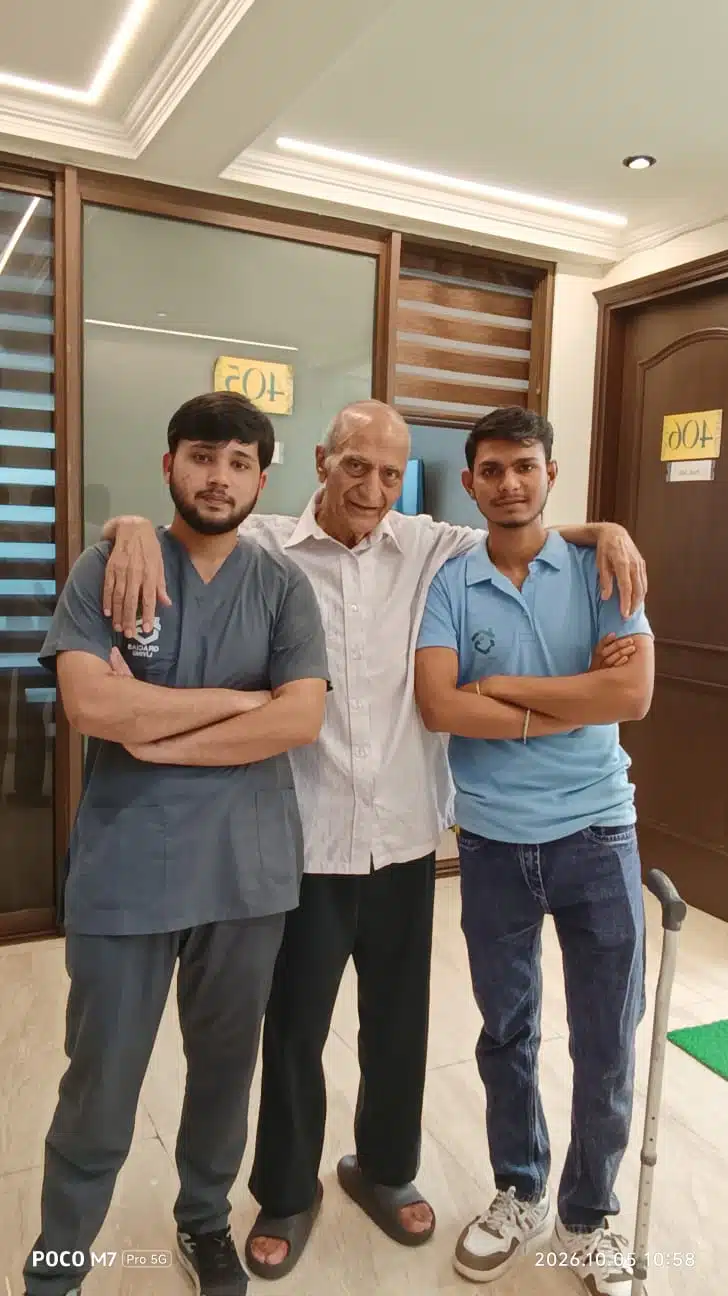
Our in house physiotherapist and visiting occupational and speech therapists offer sessions as the recovery plan needs, billed separately. Nurses and caregivers also support residents around the clock, and Dr. Chitra Anand oversees every resident’s health. In an emergency, our team moves the resident to the nearest hospital immediately.
Families also receive regular health updates and photos in a dedicated WhatsApp group. Explore our stroke rehabilitation care, check our pricing, or read real recovery journeys in our resident stories.
Frequently asked questions
Can a stroke happen without pain?
Yes. Most strokes cause no pain at all. Sudden weakness, a drooping face, slurred speech or confusion are more common than headache, so never wait for pain before acting.
Can stroke symptoms come and go?
Yes. Symptoms that disappear may signal a mini stroke, or TIA. Seek emergency medical assessment immediately, because the risk of a subsequent stroke is highest in the first few days.
Should I give aspirin during a suspected stroke?
No. Do not give aspirin or any medicine unless a doctor tells you to. Only a brain scan shows whether a clot or a bleed caused the stroke.
How soon must a stroke be treated?
Immediately. For a stroke caused by a clot, eligible patients can receive clot busting medicine within about 4.5 hours, and the sooner the better. Some patients qualify for later treatment after specialist scans, so go to hospital whatever the time.
What if my parent wakes up with stroke symptoms?
Get emergency help immediately. Tell the doctors when your parent was last seen well, usually when they went to sleep. Some patients who wake up with symptoms still qualify for treatment after specialist brain scans.
Can elderly parents recover after a stroke?
Many regain strength and independence with timely treatment and steady rehabilitation. Recovery varies with the stroke’s type and size, so ask the treating doctor for a realistic plan.
Can Gracias Living admit a parent straight from hospital after a stroke?
Often, yes. After hospital treatment, Gracias Living can admit your parent the same day, once we receive the hospital’s clinical assessment and discharge summary, and subject to medical stability and room availability. Our team then follows the treating doctor’s guidance.
Sources
- BE FAST: Reducing the Proportion of Strokes Missed Using the FAST Mnemonic, Stroke, 2017
- Time Is Brain, Quantified, Stroke, 2006
- Report on the Lancet Neurology global stroke study, Down To Earth, 2024
- Emergency treatment for stroke: thrombolysis and thrombectomy, Evidently Cochrane
- ICMR National Stroke Registry hospital study (International Journal of Stroke), The South First
- Thrombolysis: a clot busting treatment for ischaemic stroke, The Royal Wolverhampton NHS Trust
- Transient ischaemic attack and neurovascular care, Guy’s and St Thomas’ NHS Foundation Trust
- A needle cannot save the life of someone having a stroke, Full Fact, 2022
Plan your parent’s recovery before discharge day
Talk to our team about stroke rehabilitation at Gracias Living. We will help you plan the right care for your parent’s recovery.
Talk to our team