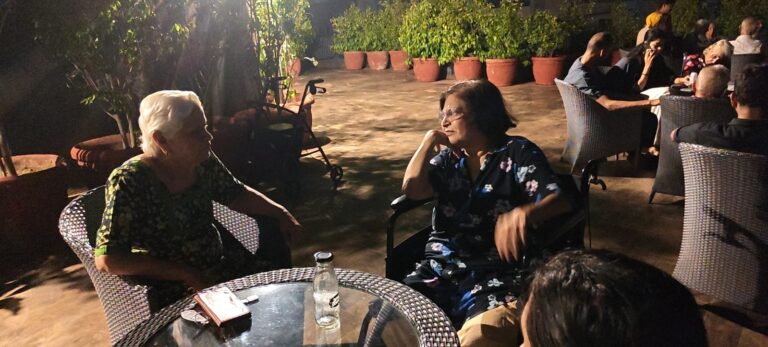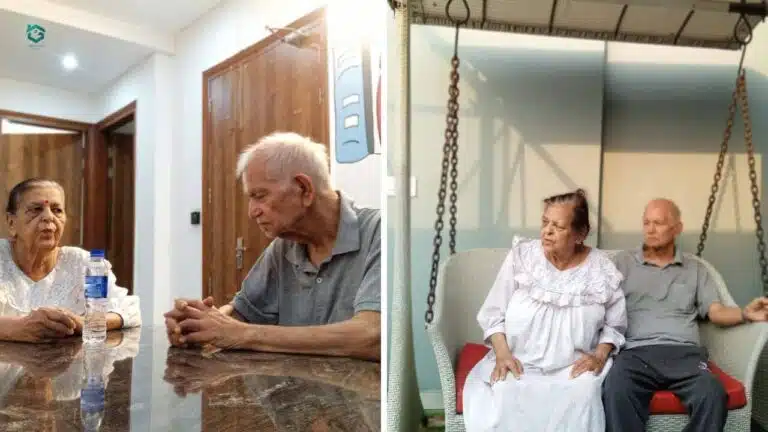

Most older Indians live with family. LASI (India’s national ageing survey in 2017 and 2018) found that about 7 in 10 people aged 60 years and above lived with at least one child; 1 in 5 lived with a spouse but no children and 1 in 20 lived alone (the survey lumps everyone aged 60 and over together).
Ask families in Gurgaon where their parents live and you get three answers. Old family house. With us. Alone, in another city. National data tell the same story.
This guide tells you where older Indians live, what ageing in place means, how each living option compares, and how to tell when your parent needs more support.
Where do most 70 year olds in India live?
Most live with their children. India’s largest study on ageing, the Longitudinal Ageing Study in India (LASI), was done in 2017 and 2018. A study of 30,370 people aged 60 years and above from that survey found these living arrangements:
Source: LASI Wave 1 (2017 and 2018), adults aged 60 years and over, as reported in BMC Geriatrics. Figures add up to 99.9% because of rounding.
Add the first two groups together and you get about 70%. So roughly 7 in 10 older Indians live with a son or daughter.
LASI reports these figures for everyone aged 60 and over. It does not publish a separate figure for people in their seventies. Living arrangements also change with age, so take these numbers as the broad picture of older Indians.
What does ageing in place mean?
Ageing in place means growing older at home and in your community rather than moving into a care setting.
In India, ageing in place and living with children often go hand in hand. Many parents grow old in the family home with a son’s or daughter’s family under one roof; others age in place alone or as a couple after the children have moved away.
Ageing in place works best when the parent is healthy and has help nearby. It gets harder when health changes and nobody is home during the day.
How many older Indians live alone?
One in 20 older Indians live alone, says LASI. Two groups are more likely:
Older women. Women tend to live longer than men, so many spend their later years single. IIPS analysis of LASI data showed that 9% of elderly women lived alone.
The oldest seniors. IIPS research on LASI data shows that the likelihood of living alone increases with age.
Why is the picture changing?
Families have changed faster than homes: children leave for work in other cities or abroad; parents stay back at home. Researchers on LASI say urbanisation and children moving overseas are two reasons why living arrangements of older Indians are changing.
People also live longer. The India Ageing Report 2023 by UNFPA and IIPS reports and projects:
- In 2022, India had 149 million people aged 60 and above (10.5% of the population).
- That number is projected to reach 347 million by 2050, or 1 in 5 Indians.
- The 80 and above group is projected to grow by about 279% between 2022 and 2050.
Longer lives mean more years a parent might need help with medicines, meals, bathing and getting around.
How do the main living options compare?
Each one fits a different stage in life. No one option fits everyone. Use this comparison to see where your parent fits today.
| Living option | Works best when | Daily support comes from | Things to check |
|---|---|---|---|
| Own home, alone | Your parent is healthy, active and has friends and neighbours nearby | Your parent, domestic help, neighbours | Who notices a fall or a missed medicine, and how fast? |
| Own home, with spouse | Both partners manage the daily work | Each other | What happens if one partner falls ill? |
| With children | Someone stays home during the day and there’s room in the house | Family members | Time alone while family is at work; strain on the caregiver |
| Own home with a carer or home nursing | Your parent wants to stay at home but needs regular help | A caretaker, plus nurses or therapists you arrange separately | Training, leave cover, supervision, backup |
| Independent senior living | Your parent is independent and wants a community of peers | Your parent, with shared services on site | How much care the community provides as needs grow |
| Assisted living or a luxury old age home | Your parent needs daily help, nursing support or rehab | Care staff and nurses employed by the provider | Staffing on each shift; hospital transfer arrangements; updates to family |
Families are involved in every option. Care homes do the daily tasks so families can spend time on visits and decisions. Read more in our guides to assisted living in Gurgaon and luxury retirement homes in India.
How do you know your parent’s current home isn’t working anymore?
Look for patterns, not one bad day. These are signs for a family conversation:
- Your parent spends most of the day alone.
- They had a fall or a near fall recently.
- They miss medicines or take the wrong dose.
- They skip meals or have lost weight.
- The fridge has spoiled food in it, or the house looks dirtier than before.
- They forget what they said or get lost in familiar places.
- Stairs, bathroom or kitchen now feel unsafe.
- Caretakers keep leaving and you keep hiring new ones.
- They just came home from hospital and need daily nursing or rehab.
- You or your spouse are tired from managing care.
Every parent is different. Start with this list to have the conversation, and then get a proper care assessment done. Talk to your parent’s doctor about any changes in health. Memory changes need special attention; our dementia care page explains what to look for.
Where do 70 year olds live in Gurgaon?
Many live with their working kids in apartments all over the city. Others move here from their hometowns to be closer to family. When I sit with our residents for a game of cards, many tell me they missed those moments at home. A full house doesn’t mean company during the day.
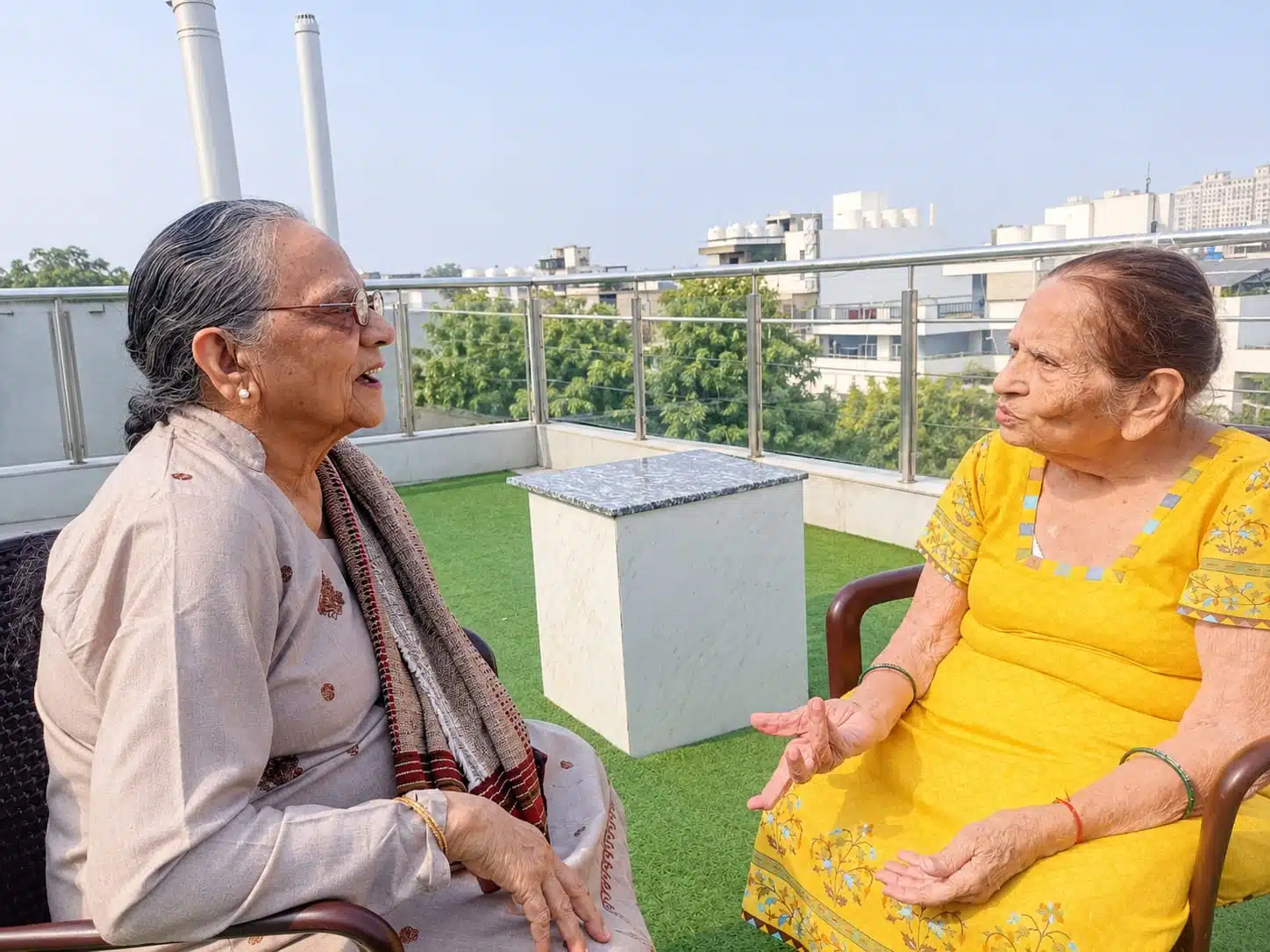
Families looking for luxury old age homes in Gurgaon can visit both Gracias Living homes.
Gracias Living at a glance
- Two homes in Gurgaon: Blossom in Sector 43 and Zinnia in DLF Phase 3.
- 3 years of senior care and 233+ families cared for.
- Nurses and caretakers on every shift, with night rounds.
- Single and shared rooms. Couples can share a room.
- Same day admission from hospital with the hospital’s clinical assessment and discharge summary.
- Paras, Max, Fortis, Narayana and Medanta hospitals nearby.
- A family WhatsApp group with at least one photo or video per day.
- Family can come anytime after informing the group.
- There is no maximum stay. Residence agreements renew every 11 months.
See daily life on our Life at Gracias Living page, read real resident stories, or check our pricing.
Frequently asked questions
Do most 70 year olds in India live with their children?
Most older Indians do. LASI data from 2017 and 2018 shows that about 7 in 10 Indians aged 60 years and over lived with at least one child (the survey does not separately report people in their 70s).
What percentage of older Indians live alone?
About 5% of Indians aged 60 and above live alone, says LASI. Among elderly women, it’s about 9%.
What does ageing in place mean in India?
Ageing in place means growing older at home and in your community. In India, this often happens with children under the same roof (or alone or as a couple after the children move away).
Is it normal for a 70 year old to move into an old age home?
Yes. Lots of families do it when children live in other cities or work long hours. A good senior care home gives your parent trained staff, daily routines and people their own age to talk to.
When should a 70 year old consider assisted living?
Think about it when your parent needs help with medicines, bathing or moving around every day; has had a fall; spends most of the day alone; or needs care after a hospital stay. A care assessment helps you decide.
Can a couple live together in an old age home?
Yes. At Gracias Living, couples can share a room.
Can family visit a parent in a senior care home in Gurgaon?
At Gracias Living, family can come anytime after informing the family WhatsApp group. Outside visitors can come between 11 am and 4 pm.
Looking for a safe home for your parent in Gurgaon?
Come to Blossom or Zinnia, meet our care team and see the rooms for yourself. We take calls and WhatsApp messages every day.
Sources
- BMC Geriatrics, “Living arrangement of Indian elderly: a predominant predictor of their level of life satisfaction” (LASI Wave 1, 2017 and 2018): bmcgeriatr.biomedcentral.com
- International Institute for Population Sciences, India Population Report, chapter on social security for the elderly: iipsindia.ac.in
- IIPS research abstract on living arrangements of the elderly in India (LASI Wave 1): ipc2021.popconf.org
- UNFPA India and IIPS, Caring for Our Elders: India Ageing Report 2023: india.unfpa.org