

In old age, activity is not as intense as it is about safe and comfortable movement. Senior Tai Chi practices are a non-strenuous exercise when it comes to keeping the body active. Tai Chi was trained particularly in seniors and older adults aged 60 and above, and is more concerned with slow movement, deep breathing, and body awareness.
The practice improves balance, flexibility, resting position, and psychological relaxation, and aids in preventing falls.
This guide provides beginner-friendly Tai Chi practices that are safe to use at home among seniors. Many seniors begin Tai Chi because they already face common age-related challenges, and understanding the problems faced by the elderly can help caregivers support them better.
What Is Tai Chi for the Elderly?
Evidence shows Tai Chi may reduce falls in older adults, improve balance and cognitive function, and is considered safe and low-impact for seniors.
Tai Chi is an old type of exercise that is based on the basis of slow and flowing body movements, combining relaxation, breathing, and concentration. Tai Chi is particularly appropriate to the aged since, unlike fast or high-impact workouts, Tai Chi is very gentle, flowing, and controlled. You don’t need speed or strength here. Just slow, soft movements, good balance, and paying attention to your body.
How Tai Chi Is Adapted for Seniors
The Tai Chi of the elderly is tailored to the bodies and evolving physical and Healthy aging capabilities of the elderly
- Movements are slower and more gentle
- Knee bending is reduced to protect joints
- Greater focus on balance, posture, and breathing
- Movements can be modified or done seated
Traditional Tai Chi vs Senior-Friendly Tai Chi
The more common forms of Tai Chi involve deeper poses, extended routines, and more intricate movements in the traditional Tai Chi.
Senior-friendly Tai Chi eliminates the extraneous intensity and complexity, leaving only that which is beneficial in promoting health, balance, and relaxation.
This will have the effect of making Tai Chi safer, more comfortable, and more likely to be practiced by the elderly on a regular basis.
Top Benefits of Tai Chi Exercises for Older Adults

1) Physical Benefits
The ability of Tai Chi to strengthen the body without strain is one of the largest benefits of Tai Chi for seniors.
- Enhances equilibrium and stability
- Improves the flexibility of joints.
- Builds leg strength gradually
- Helps reduce the risk of falls and injuries
Simple Tai Chi exercises among seniors may simplify daily routines, such as walking and standing,g with practice
2) Mental & Emotional Benefits
Tai Chi is not just a kind of exercise, but a good mind exercise as well.
- Reduces stress and anxiety
- Enhances concentration and attention.
- Breaks through lack of confidence and emotional imbalance.
Games and fun activities for Seniors. combined with Tai Chi, are one of the best ways for seniors to reduce stress and stay mentally engaged.
3) Overall Health Benefits
Regular practice of Tai Chi can be helpful in numerous aspects of overall health:
- Supports better sleep quality
- Improves posture and coordination
- Encourages independence in daily activities
This is why many people ask, is Tai Chi good for seniors? The answer is yes — both physically and mentally.
Beginner Tai Chi Exercises for Seniors
Who Should Start with Beginner Tai Chi?
Beginner Tai Chi for seniors is ideal for:
- Older adults new to exercise
- Seniors with limited mobility
- Those returning to activity after illness or injury
Recommended Duration & Frequency
- 10–15 minutes per session
- 3–5 days per week
Short but frequent sessions prove better than long and exhausting sessions.
Top 7 Tai Chi Exercises for Seniors (With Pictures)
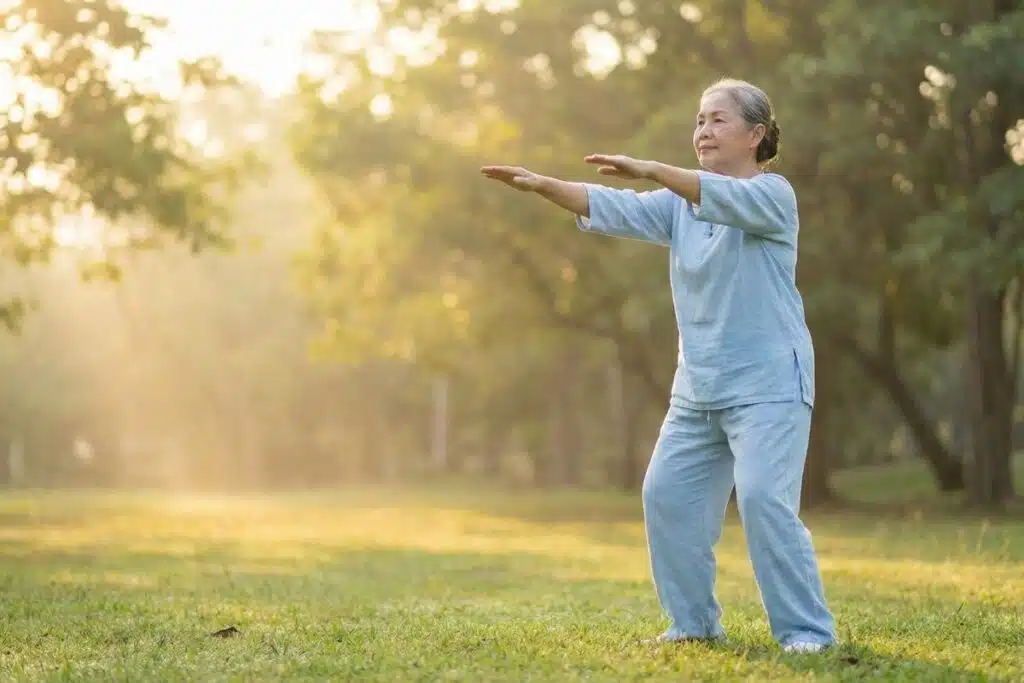
1) Opening Posture
Benefits:
Assists in postural facilitation and creates breathing awareness.
It is the initial motion that is normally taught to seniors learning Tai Chi in the beginning stages, since it warms up the body and the mind.
How to do it:
Sit with the feet at a comfortable distance from the shoulders, and knees soft. Keep your elbows straight, yet with arms at your side.
As you inhale slowly, raise your arms slowly forward and upwards. As you breathe out, bring your arms down slowly in the process of relaxation. We are now concerned with deep breathing and stretching tall.
2) Cloud Hands
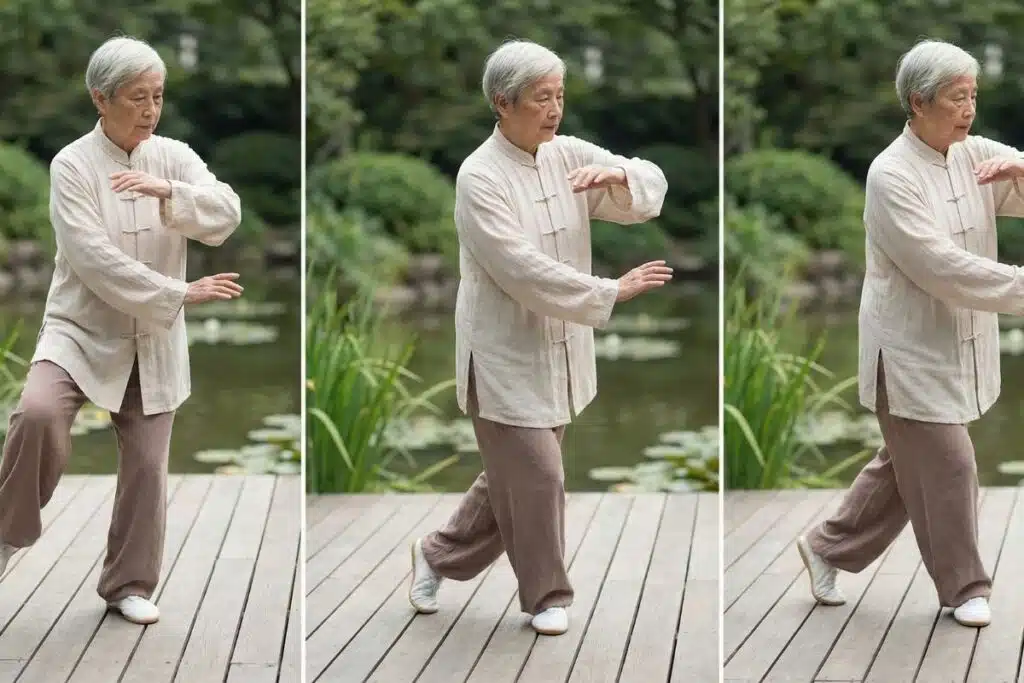
Advantages:
Enhancement of coordination and balance. Cloud Hands is a common Tai Chi among the elderly as the movement trains the body control and balance, despite being gentle.
How to do it:
Gradually take off and change your foot one by one with the smooth, circular movement of your arms across your body. The movements are not to be forced, but rather flow like floating through the water.
Senior adjustment:
Make very small steps or do the movement close to a chair or wall in case of unsteadiness in balance.
3) Parting the Wild Horse’s Mane

Benefits:
Helps in the movement of the hips and leg strengthening.
This movement assists in enhancing lower-body strength, which is significant to Tai Chi among older individuals who wish to remain stable and move around.
How to do it:
Walk slowly forward with one hand placed upward and the other placed downwards as though directing energy. Maintain a straight posture of the body and controlled movements.
4) Brush Knee and Push
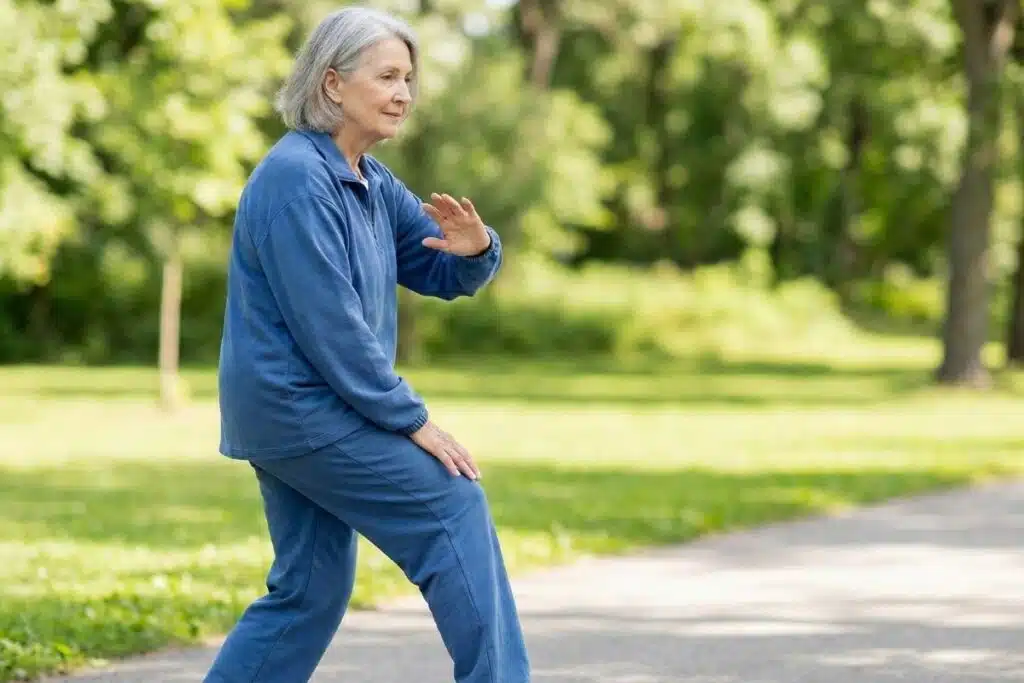
Advantages:
Assistance with controlled mobility and stability.
The exercise enhances the coordination between the lower and upper body and it is commonly part of 7 basic Tai Chi exercises to be used by the seniors.
How to do it:
When you make a slow step forward push one hand slightly past your knee and push forward with the other. The motion must be natural and equalized, and not compelled.
Elderly adjustment:
Do not concentrate on the distance you jump and extend, but on remaining stable.
5) White Crane Spreads Its Wings

Benefits:
Enhances the balance on one side and the general coordination.
This exercise assists the elderly in being more conscious of their balance on either side of the body.
How to do it:
Bend your weight slightly towards one side and softly lift one of your arms upwards without straining the other. Walk slowly and maintain yourself in an upright position.
Old Age adjustment:
Stand on the ground using both legs in case one leg is painful to stand on.
6) Drawing the Bow
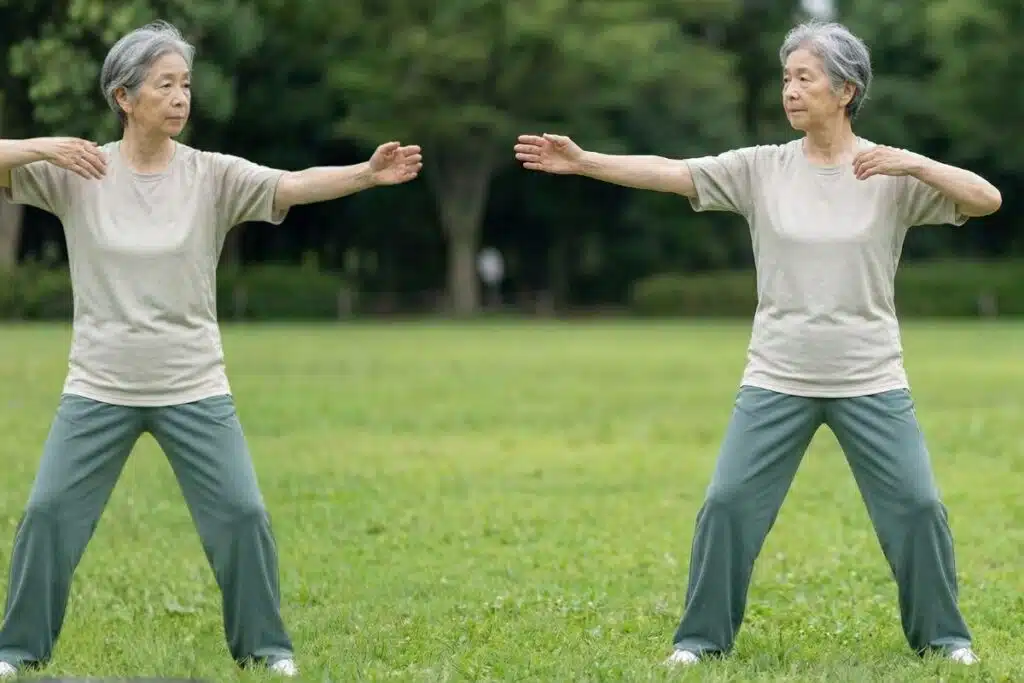
Drawing the Bow is also an effective Tai Chi exercise among older adults to build strength in a gentle manner and is also good to enhance their concentration.
Advantages:
The arms are made stronger and focus is enhanced.
How to do it:
Bend one arm straight forward and drag the other arm slowly towards the back like a bow. Remember to hold your shoulders in a relaxed position and make your movements very smooth.
Senior adjustment:
Maintain the softness of the elbow; do not stretch the arms or lock them.
7) Touch the Sky
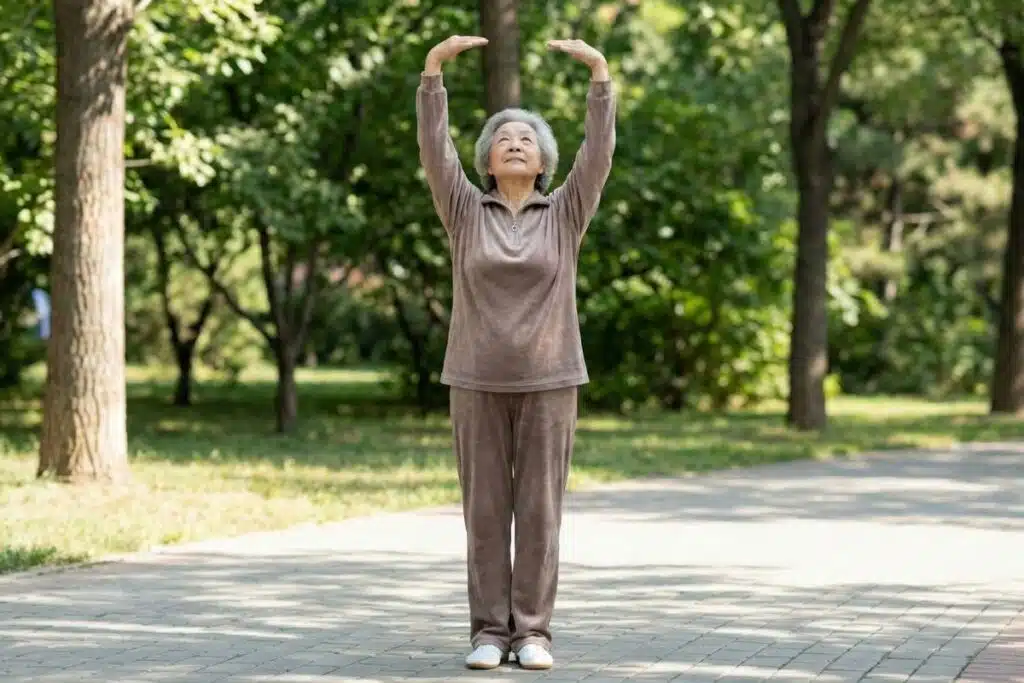
This is a calming movement often used at the end of Tai Chi exercises for seniors with pictures because it relaxes the body.
Benefits:
Gently stretches the spine and shoulders while supporting deep breathing
How to do it:
Lift one arm upward as if reaching toward the sky while breathing in. Slowly lower it as you breathe out, then switch to the other side. Let the movement follow your breath.
Senior modification:
This movement can be done while sitting on a chair if standing feels uncomfortable.
Common Mistakes to Avoid While Practicing Tai Chi as a Senior
- Rushing through movements
- Holding the breath
- Over-bending the knees
- Ignoring pain or discomfort.
- Skipping warm-up or cool-down
- Practicing without support in the beginning
Slow, steady movements always bring the best results with Tai Chi.
Simple 10-Minute Tai Chi Routine for Seniors
Warm-up (2 minutes):
- Gentle neck rolls
- Slow shoulder rotations
- Easy arm swings to loosen the body
Main Practice (6 minutes):
- Opening Posture: Helps relax the body and improve breathing
- Cloud Hands: Improves coordination and balance
- Brush Knee and Push: Supports controlled stepping and stability
Cool-down (2 minutes):
- Deep, relaxed breathing
- Slow arm movements to calm the body
This short Tai Chi routine is ideal for daily practice and helps seniors stay active without strain.
Conclusion
Tai Chi is not merely an exercise, but a lifelong movement practice that helps maintain balance, strength, flexibility, and calmness of mind. For older people, particularly seniors, it is a safe and relatively painless way to remain active.
Take it slow, be regular, and do what your body is telling you. Tai Chi can also be an easy,y everyday routine that can enhance physical condition and emotional state at any age with the practice.
Why Choose Gracias Living for Elder Care
Gracias Living Elder Care Services focuses on helping older adults stay active, healthy, and confident in their daily life.
- Personalized Nutritional Plans: Meals tailored to each senior’s dietary needs.
- Round-the-Clock Security: Ensuring seniors feel safe at all times.
- Hygiene & Cleanliness: Maintaining a clean and comfortable living environment.
- Medical Assistance & Regular Health Checkups Keeping seniors healthy and monitored.
- Quick Ambulance Service: Emergency support within minutes.
- Active & Engaging Lifestyle: Gentle exercises like Tai Chi, games, and wellness activities.
Frequently Asked Questions (FAQs)
1) Is Tai Chi safe for seniors over 70?
Yes. Tai Chi is considered one of the safest exercises for seniors when practiced gently.
2) How often should seniors practice Tai Chi?
3 to 5 times per week is ideal.
3) Can Tai Chi help prevent falls in older adults?
Yes. Improved balance and leg strength help reduce fall risk.
4) Is Tai Chi suitable for seniors with arthritis?
Yes, especially because it’s low-impact and gentle on joints.Can Tai Chi be done at home without an instructor?
5) Can Tai Chi be done at home without an instructor?
Absolutely. Many seniors practice Tai Chi safely at home.