
Medically reviewed by Dr. Chitra Anand, Head of Medical Services, Gracias Living
This topic can feel heavy. This article shares general information for families. It does not replace advice from your parent’s doctor.
Palliative care is specialised care for people living with a serious illness. It relieves pain, breathlessness and other symptoms, and it supports the whole family. Families can start it on the day of diagnosis and continue it alongside treatment. Also, it does not mean giving up, and it is not only for the last days of life.
Most families hear the word “palliative” for the first time in a hospital corridor. Usually from a busy doctor. Usually on a bad day.
The word scares people. Many families think it means the doctors have stopped trying. As a result, that fear stops them from asking for help that could make every day easier.
The gap is huge. The World Health Organization estimates that about 56.8 million people around the world need palliative care every year. However, only about 14% receive it. In India, a 2025 study reports that less than 4% of the 7 to 10 million people who need it can access it.
We collected the questions families ask most, in India and around the world. Here are clear, honest answers to all 18.
1. What is palliative care?
Palliative care treats the symptoms and stress of a serious illness. Meanwhile, the treating doctor keeps managing the illness itself. The palliative team focuses on how your parent feels each day.
In fact, the World Health Organization describes it as care that improves the quality of life of patients and their families when they face a life threatening illness.
Palliative care usually covers:
- Pain, breathlessness, nausea and constipation
- Poor appetite, swallowing difficulty and weight loss
- Sleep problems, anxiety and low mood
- Help with bathing, dressing, toileting and moving safely
- Guidance and emotional support for the family
- Planning ahead for difficult decisions
A team delivers it. The team includes a palliative medicine doctor, nurses and trained caregivers. A physiotherapist, dietitian and counsellor often join as needs grow. Also, your parent’s own specialist stays involved.
2. Is palliative care the same as hospice care?
No. Hospice care is one part of palliative care. It usually begins in the final months of life, when the focus moves away from cure. Each hospice sets its own admission rules. In contrast, palliative care can begin years earlier and continue alongside treatment.
| Curative treatment | Palliative care | Hospice care | |
|---|---|---|---|
| Main goal | Cure or control the disease | Relieve symptoms and support the family | Keep the person peaceful in the final months |
| When it starts | At diagnosis | At diagnosis of a serious illness, or any time after | Usually in the last few months of life |
| Treatment continues? | Yes | Yes, alongside palliative care | Treatment aimed at cure usually stops |
| Who leads | The specialist doctor | A palliative team with the treating doctor | A hospice or palliative team |
| Where it happens | Hospital or clinic | Home, hospital, hospice or care home | Home, hospice or care home |
3. Does palliative care mean giving up?
No. Palliative care adds a layer of support. In other words, it takes nothing away. Your parent keeps their oncologist, cardiologist or neurologist. Treatment continues for as long as it helps.
Even so, many Indian families avoid the word. Some hide it from their parent completely. Instead, describe what the care does: “This team will help with your pain and help you sleep better.” Most parents welcome that, because it speaks to what they feel.
4. Can palliative care help a person live longer?
In some studies, yes. A landmark 2010 study in the New England Journal of Medicine followed 151 people with advanced lung cancer. Half received early palliative care alongside their cancer treatment. That group reported a better quality of life and fewer signs of depression. They also lived longer, with a median survival of 11.6 months against 8.9 months.
However, this study looked only at advanced lung cancer. So it cannot promise the same result for every illness. Still, it shows that early palliative care did not cost these patients time.
5. When should a family start palliative care?
The best time is soon after a serious diagnosis. However, most families start much later. Speak to your parent’s doctor when you notice any of these signs. Also, call the doctor at once for any sudden or severe change.
- Pain disturbs your parent’s sleep or daily routine
- Breathlessness appears at rest or during small tasks
- Meals go uneaten, weight drops or swallowing gets hard
- Hospital admissions keep repeating, twice or more in six months
- Daily tasks like bathing, the toilet or walking now need help
- Your parent seems anxious, low or withdrawn
- You or another family caregiver feel exhausted
6. Which illnesses need palliative care?
Many families still believe palliative care is only for cancer. In fact, it supports any serious illness that affects daily life, including:
- Cancer
- Heart failure
- COPD and other long term lung diseases
- Kidney failure and liver disease
- Advanced dementia and Alzheimer’s disease
- Parkinson’s disease
- Stroke with lasting disability
- Advanced frailty in very old age
7. Where can a senior receive palliative care?
In general, families have four main options. The right one depends on your parent’s symptoms and on how much care the family can safely give.
- Home: suits a parent with stable symptoms and a family member available most of the day. A doctor and nurse visit on a schedule.
- Hospital palliative unit: suits a short stay when symptoms flare and need close medical control.
- Hospice: suits the final months of life.
- Residential care home: suits a parent who needs nursing and assisted living support day and night, regular help with personal care and safe mobility support.

8. Is morphine safe? Will my parent become addicted?
Doctors use morphine and similar medicines to treat severe pain and breathlessness. The World Health Organization includes palliative care medicines, including pain relief, on its list of essential medicines.
First, the doctor usually starts with a low dose and adjusts it slowly. Drowsiness often appears in the first few days and then settles. Constipation can continue, so the doctor plans for it from the start.
Many families worry about addiction. When a doctor prescribes the medicine for pain in a serious illness and reviews the dose regularly, addiction is uncommon. Over time, the body can get used to the medicine. Doctors call this physical dependence, and it differs from addiction. The doctor plans every dose change, so never change a dose on your own.
9. How much does palliative care cost in India?
In short, costs vary widely. These factors decide the final amount:
- Where care happens: home, hospital, hospice or care home
- Hours of nursing your parent needs each day
- Medicines, tests and specialist consultations
- Equipment such as an oxygen concentrator, hospital bed or air mattress
- How long care continues
Because of this, ask every provider for a written estimate. Then check what the fee includes and what they bill separately.
10. Where can you find palliative care in Gurgaon?
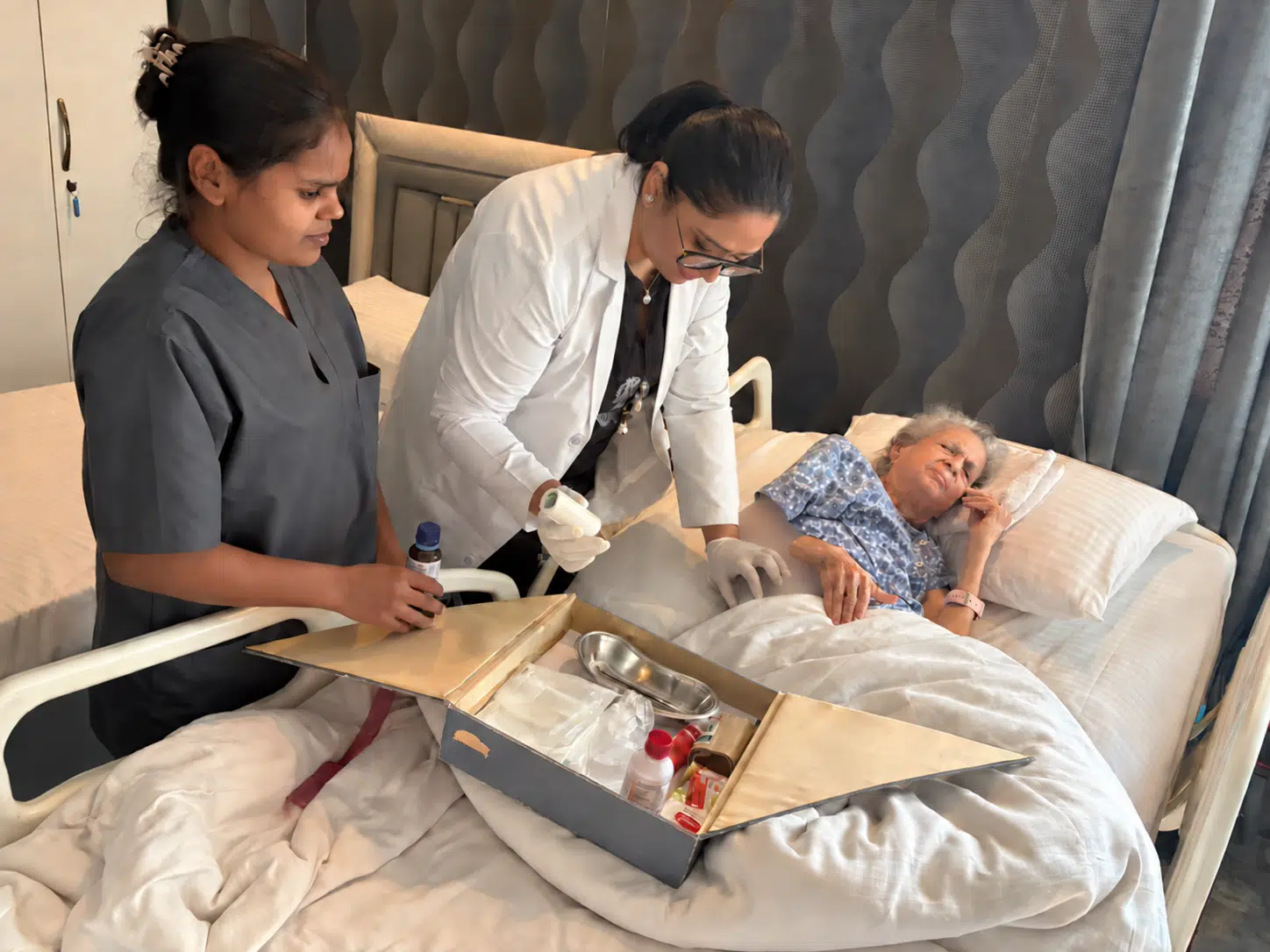
Gracias Living offers residential palliative care in Gurgaon at two homes: Blossom in Sector 43 and Zinnia in DLF Phase 3. Across all our services, we have cared for more than 233 families in three years.
Gracias Living is a care home, not a hospital. That is why we ask every family to consult a palliative medicine specialist first. Our nursing team then follows that specialist’s plan exactly.
What families get at Gracias Living
- Nursing day and night: nurses give medicines on schedule and watch for every change.
- Doctor visits: our physician sees residents regularly, and Dr. Chitra Anand guides the care team.
- Your own doctors: residents keep their treating doctors through video consults and follow ups.
- A caretaker by the bed: families can add a personal caretaker, who stays in the room day and night. We bill this separately.
- Meals that adapt: our kitchen adjusts fresh vegetarian meals to your parent’s appetite and swallowing.
- Your choice of room: a private room or twin sharing, whichever the family prefers.
- Fast help: every room has an emergency call system. Staff respond within two minutes, and our local ambulance partners reach us in five minutes or less.
- Family in the loop: each family gets a WhatsApp group with our nurses and care team.
- Quick setup: we arrange the medical equipment your parent needs within four hours.
- Same day admission: we can often admit your parent straight from hospital. Admission depends on the hospital’s clinical assessment, the discharge summary and room availability.
- Clear limits: when your parent needs an IV line or a clinical procedure, we call a doctor in or move them to a nearby nursing facility.
What palliative care costs at Gracias Living
Palliative care at Gracias Living costs ₹1,30,500 to ₹1,50,000 a month, depending on the support needed. For palliative care, families can also choose daily billing when the length of stay feels uncertain. However, we bill medicines and tests separately. Our pricing page explains what the monthly fee covers.
11. What happens in the last days at Gracias Living?
This is the question families find hardest to ask. So here is exactly how we handle it.
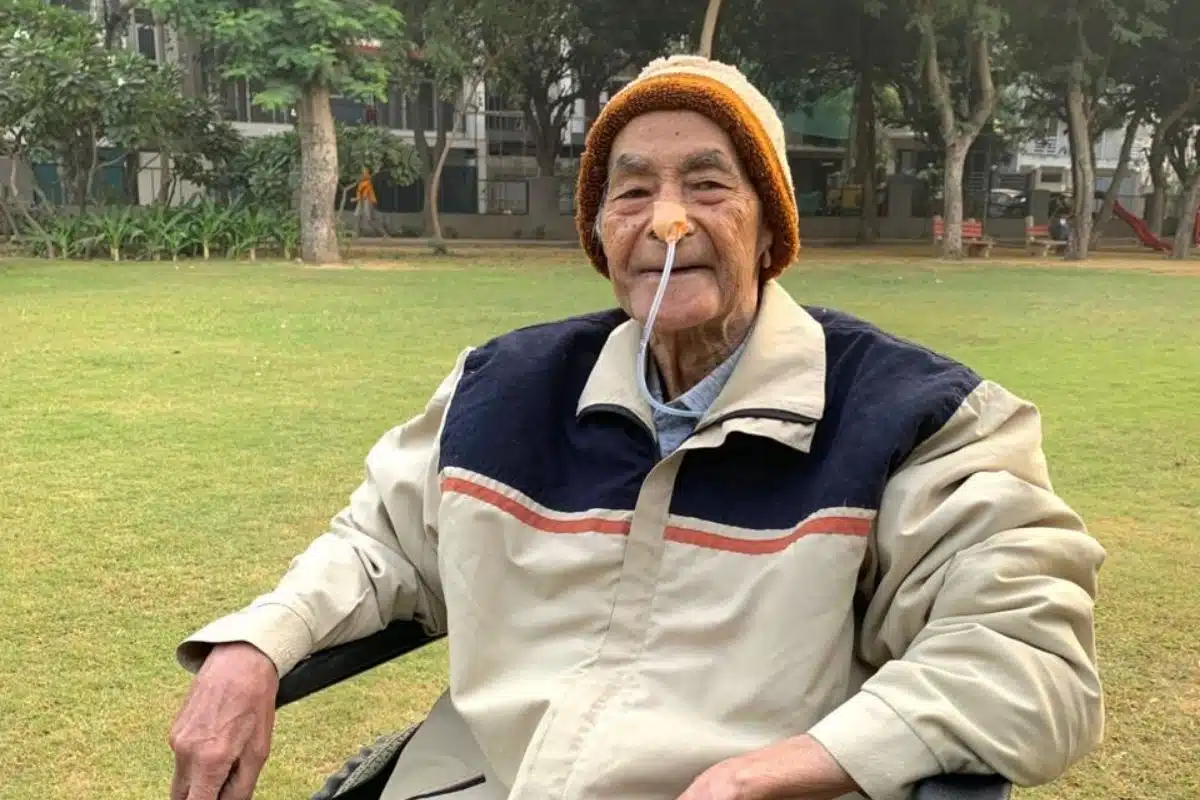
- You can stay close: family members can stay overnight with their parent in the last days. Overnight stays carry a charge.
- Prayers and rituals: you can hold prayers and religious rituals in your parent’s room.
- Favourite food: you can bring your parent’s favourite home food.
- No unwanted hospital transfers: many families decide they do not want another hospital admission. When the hospital has already recorded that decision through a LAMA (Leave Against Medical Advice) discharge, and you give us your written consent, we follow your wishes within the medical protocol.
- When your parent passes away: we inform you straight away, and our team stands by you. When family members need time to fly in, we arrange for your parent to rest in a mortuary until you arrive. On request, we also arrange the funeral.
Frequently asked questions
12. How do I talk to my parent about palliative care?
First, talk about what they feel, not about the word. For example, ask what bothers them most: pain, sleep or breathing. Then explain that a team can help with exactly that. Also, let the doctor join the conversation when you can.
13. Do we need a referral for palliative care?
It depends on the hospital. Some palliative clinics see patients directly, and others ask for a referral. Either way, the easiest route is to ask your parent’s treating doctor or the hospital team before discharge. At Gracias Living, we ask every family to consult a palliative medicine specialist before admission.
14. Can my parent stop palliative care later?
Yes, because palliative care follows your parent’s needs. In fact, the care plan changes when symptoms improve or worsen. For example, some people need less support for a while and more later.
15. How long can someone receive palliative care?
There is no fixed limit. Some people receive palliative care for weeks. Others, however, receive it for months or years, alongside their regular treatment.
16. Can family visit any time during palliative care?
Yes. After all, family presence matters a great deal. At Gracias Living, we arrange visits around the family. Most families visit daily, and many stay for long hours. Family members can also stay overnight in the last days, with charges applicable.
17. Is a living will valid in India?
Yes. The Supreme Court of India recognised living wills in 2018 in Common Cause v. Union of India. In January 2023, the court simplified the process and removed the need for a magistrate’s approval. A living will lets your parent state in advance which treatments they do not want, such as a ventilator, in case they cannot speak for themselves later. Finally, speak to a lawyer to draft one.
18. Does health insurance cover palliative care?
It depends on the policy. In general, health insurance policies in India cover treatment during a hospital admission. However, long stays in a residential care home usually fall outside that cover. So ask your insurer in writing what your parent’s policy includes.
Sources
- World Health Organization. Palliative care fact sheet.
- World Health Organization. Supporting countries to strengthen palliative care.
- Access to palliative care in India: situational analysis and modeling of access from public healthcare centers. ecancermedicalscience, 2025.
- SCC Online. Supreme Court simplifies procedure to withhold life support, 2023.
- Temel JS et al. Early Palliative Care for Patients with Metastatic Non Small Cell Lung Cancer. New England Journal of Medicine, 2010.
Talk to someone who has done this before
Tell us about your parent’s situation. We will tell you honestly whether we can help.
Call +91 87004 84949 Plan a visit Chat on WhatsApp