
Parkinson’s residential care becomes worth considering once home care stops being sustainable. Home care generally works well for Parkinson’s in the earlier stages. Residential care tends to become the safer, more sustainable option once falls, complex medication routines, or cognitive changes appear, or when a family caregiver reaches genuine exhaustion. This guide walks through how to tell where your parent actually stands, not just what stage the label says.

A note before you read on: this is a general educational guide, not medical advice. Parkinson’s affects everyone differently, and the right care decision for your family should always be made with your parent’s neurologist, not from an article alone.
Quick answer: Home care is generally appropriate in the earlier stages, when a person can still manage most daily activities with some support. Residential care becomes worth seriously considering once falls become frequent, medication routines grow complex, cognitive changes appear, or the primary family caregiver is reaching burnout.
How Parkinson’s actually progresses
Parkinson’s disease develops as dopamine-producing brain cells gradually decline, and it usually progresses slowly, though the pace varies significantly from person to person. According to the Parkinson’s Foundation staging system, the practical picture generally looks like this.
| Stage | What it typically looks like |
|---|---|
| Early | Symptoms on one side of the body only, minimal impact on daily life. Most people remain fully independent. |
| Moderate | Symptoms affect both sides, balance starts to be affected. Daily tasks take more effort but independence is often still possible with support. |
| Advanced | Significant disability. The person may still walk with a cane or walker, but needs real help with daily activities and can no longer safely live alone. |
| Late stage | Bedridden or wheelchair dependent unless assisted. Around the clock care is required for essentially all daily activities. |
Why the disease can feel faster in older adults
Parkinson’s is generally slow moving, but its impact can feel much faster in older patients. This is not always the disease itself accelerating. Later diagnosis, coexisting conditions like arthritis or heart disease, and general age-related frailty all make the practical impact more noticeable, even at a similar underlying pace. This is exactly why personalised, ongoing assessment matters more than relying on a stage label alone.
Signs it may be time to consider Parkinson’s residential care
- Falls or near falls. Tremors and balance issues raise real safety risk. A pattern of falls, or close calls during everyday tasks like bathing or cooking, is one of the clearest signals.
- Complex medication routines. Parkinson’s medication often needs precise, consistent timing. Missed or mistimed doses can worsen symptoms significantly, and this becomes harder to manage safely as the routine grows more complex.
- Cognitive changes. Some, though not all, people with Parkinson’s develop Parkinson’s disease dementia over time, which can bring confusion, memory problems, or hallucinations that meaningfully complicate safe caregiving at home.
- Caregiver exhaustion. Caring for a spouse or parent with Parkinson’s is demanding, and research on late-stage care consistently shows that family caregiver burnout is real and a legitimate reason to seek additional support, not a personal failure.
Worth knowing: research suggests a meaningful share of people living with Parkinson’s for many years go on to develop some degree of dementia. This does not happen to everyone, but it is common enough that families should watch for cognitive changes specifically, not just physical symptoms, when assessing whether home care remains safe. If cognitive changes do appear, our dementia care page covers what that assessment and support actually involves.
What good care actually requires at each stage
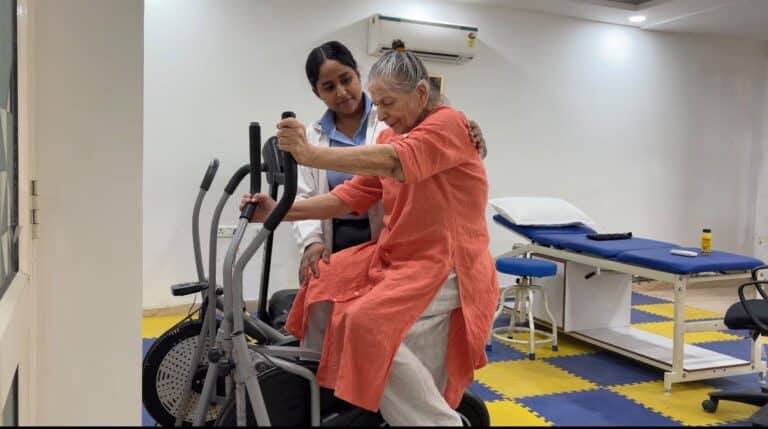
Early stage: home adaptations, medication routine support, and encouraging continued physical activity and independence usually suffice, often alongside regular physiotherapy.
Moderate stage: more hands-on daily support becomes necessary, along with closer attention to fall risk and medication timing. This is often when families first start evaluating additional support, whether at home or residential.
Advanced and late stage: around-the-clock supervision, help with essentially all daily activities, and increasingly, non-motor symptom management become the priority. Research on late-stage Parkinson’s care specifically highlights that regular access to Parkinson’s-specialised healthcare, not just general elder care, meaningfully improves quality of life at this stage.

Questions to ask any facility about Parkinson’s specifically
Not all senior care staff have specific training in Parkinson’s, and research shows that non-specialised staff benefit significantly from Parkinson’s-specific education. Before choosing residential care, ask directly:
- Does your staff have specific training in Parkinson’s care, not just general elder care?
- How do you manage precise, time-sensitive medication schedules?
- What is your fall-prevention protocol for residents with balance difficulties?
- How do you monitor for cognitive changes over time, not just physical symptoms?
- Is a doctor involved in reviewing each resident’s care plan regularly, or only during emergencies?
A facility that answers these clearly and specifically, rather than folding Parkinson’s into a generic “we handle all conditions” answer, is a meaningfully better sign.
How Gracias Living approaches Parkinson’s residential care
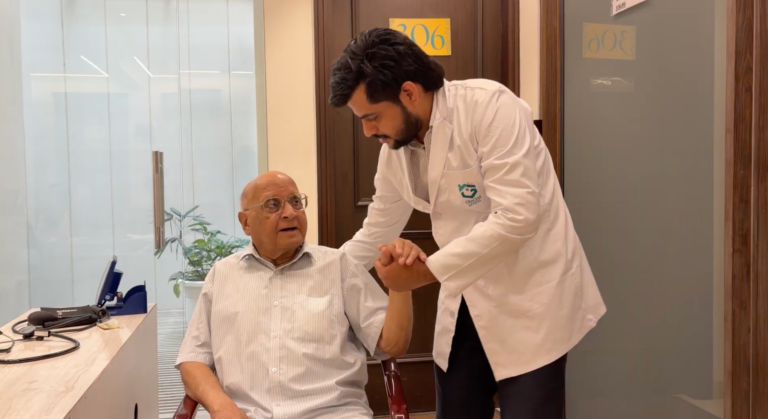
Parkinson’s care at Gracias Living includes precise medication timing, fall-risk aware daily support, and physiotherapy coordination, with oversight from Dr Vishal Siwach and Dr Chitra Anand rather than care left entirely to general staff discretion. Because cognitive changes can develop gradually in some residents with Parkinson’s, our team also tracks changes over time, not only physical symptoms, so a shift gets noticed early rather than after it becomes a crisis.
Weighing home care against residential support?
Speak with our team about what a Parkinson’s-aware care plan actually looks like day to day, or see our full pricing details first.
Call +91 87004 84949 WhatsApp Us
Frequently Asked Questions
When should we consider residential care for a parent with Parkinson’s?
Residential care is worth seriously considering once falls become frequent, medication routines grow too complex to manage safely at home, cognitive changes appear, or the primary family caregiver is reaching genuine exhaustion.
Does everyone with Parkinson’s eventually develop dementia?
No, not everyone. However, research suggests a meaningful share of people living with Parkinson’s for many years go on to develop some degree of dementia, which is why families should specifically watch for cognitive changes, not just physical symptoms.
Why does Parkinson’s medication timing matter so much?
Parkinson’s medication often needs precise, consistent timing to control symptoms effectively. Missed or mistimed doses can noticeably worsen symptoms, which becomes harder to manage safely as the medication routine grows more complex over time.
Can Parkinson’s progress faster in older adults?
The disease itself is generally slow moving, but its practical impact can feel faster in older adults due to later diagnosis, coexisting conditions like arthritis or heart disease, and general age-related frailty, rather than the disease necessarily accelerating.
Is caregiver burnout a legitimate reason to consider residential care?
Yes. Research on caregiving in Parkinson’s consistently shows genuine caregiver exhaustion is common and a legitimate, serious factor in care decisions, not a personal failure to be managed through alone.
What should we ask a care facility about Parkinson’s specifically?
Ask whether staff have specific Parkinson’s training, how medication timing is managed, what fall-prevention protocols exist, how cognitive changes are monitored over time, and how regularly a doctor reviews the care plan.
Is home care always better for early-stage Parkinson’s?
Generally yes, home care with medication support and continued physical activity works well in earlier stages when a person remains largely independent, though this should be reassessed regularly rather than assumed to remain true indefinitely.
How does Gracias Living support residents with Parkinson’s?
Care includes precise medication timing, fall-risk aware daily support, and physiotherapy coordination, with oversight from Dr Vishal Siwach and Dr Chitra Anand, along with ongoing tracking of cognitive changes over time.