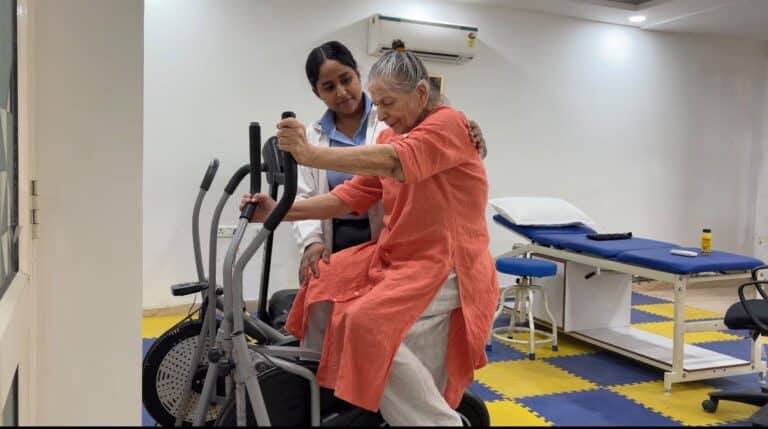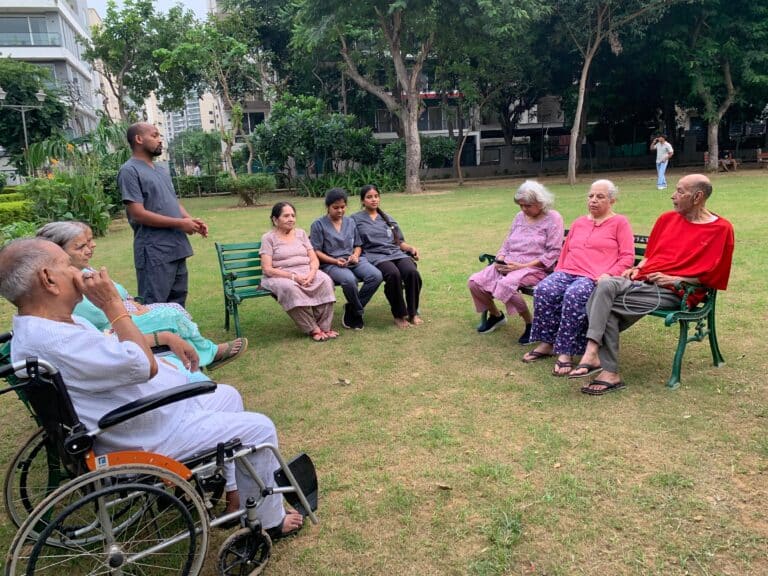

Most families tour a home once, maybe twice, before choosing an old age home in Gurgaon. That one decision shapes a parent’s daily life for years. Still, a good tour can look and feel warm without answering the questions that matter most. This is the checklist to take with you.
The short answer
Judge every old age home on four things. First, check what care it can give today and as needs grow. Second, confirm who is on duty at night. Third, understand exactly what happens in an emergency. Finally, get every fee and contract term in writing.

Two homes can look identical in photos. Yet they may run very differently when a resident has a bad night. We grouped these 20 questions by what they reveal. Ask them in order on any tour, and note how each home answers. Under each question, you will also find what a good answer sounds like.
Medical Care and Emergencies
1. How fast does a doctor respond, and who acts in the first few minutes?
“Doctor on call” can mean ten minutes or several hours. First, ask for the real response time. Then ask who is physically present to act before the doctor arrives.
Good answer: a named role on every shift, a clear response time, and a doctor who already knows the resident’s medical history.
2. What happens in a medical emergency at 3am?
Ask them to walk you through it step by step. First, who notices the problem? Next, who decides on hospital care? Finally, who calls the ambulance and the family?
Good answer: a written escalation procedure that any staff member can explain without checking with a manager.
3. Are nurses on duty through the night?
Many homes staff well in the day and thinly at night. For this reason, ask how many nurses are physically present on the night shift.
Good answer: an actual number, not “someone is always available.”
4. Who gives medicines, and how do you record each dose?
Some homes give medicines directly. Others, however, only remind residents. Ask where staff record each dose and what happens when a resident misses one. This matters especially for anyone on several prescriptions.
Good answer: trained staff give and log every dose, and a nurse checks the record.
5. Which hospital do you work with, and how does a transfer happen?
Distance matters. However, process matters more. Ask who arranges the ambulance, who travels with the resident, and how the hospital receives medical records.
Good answer: a named hospital, a fixed ambulance arrangement, and medical records that travel with the resident.
Staff and Daily Care
6. How many caregivers and nurses work each shift, for how many residents?
A general staff ratio often counts cooks, drivers and office staff. Instead, ask only about people who give direct care, shift by shift. In fact, a home that looks well staffed at 11am may look very different after 9pm.
Good answer: separate day and night numbers for direct care staff.
7. How long have your core caregivers worked here?
Frequent turnover means residents keep meeting new faces. Familiar caregivers notice small changes early, for example a skipped meal or a new cough.
Good answer: an honest figure, and caregivers who know each resident by name and routine.
8. Which conditions can you support, and when would a resident need to move?
Ask about dementia care, limited mobility, a feeding tube and stroke rehabilitation. Ask even when none of these applies today. After all, needs change, and a move is hard on a settled resident.
Good answer: a clear list of what the home supports, and honest limits on what it does not.
9. Who writes each resident’s care plan, and how often do you review it?
One routine applied to everyone is a warning sign. Ask to see a blank or anonymised care plan. Also ask how the resident gets a say in their own care.
Good answer: a doctor or senior nurse leads the plan, reviews it regularly, and involves the resident and family.
Daily Life and Living Space

10. What does a normal day look like, hour by hour?
Ask for a sample schedule, not a brochure line. Then ask how residents choose or skip activities. For example, see how daily life at Gracias Living runs for one example.
Good answer: a clear routine with room for personal choice.
11. Can we visit again at a different time of day?
A morning tour shows a home at its best. In contrast, an evening visit shows ordinary life. Ask how visiting works and whether you can return at another time.
Good answer: yes, with sensible rules that protect residents’ rest and privacy.
12. What does an ordinary lunch look like?
Ask to see or taste a regular meal, not one prepared for visitors. Also ask how the kitchen handles diabetic, soft or low salt diets.
Good answer: menus planned around each resident’s health and taste.
Look beyond square footage. Ask about privacy, sleep, noise and personal space.
Good answer: specific, practical differences, explained honestly.
14. What happens on an ordinary Tuesday?
Photo walls show a year of highlights. Instead, ask what a resident actually does on a normal weekday.
Good answer: named daily activities, with special events on top.
Pricing and Contracts
15. What does the monthly fee include, in writing?
A written breakdown prevents misunderstandings later. Above all, ask for it before admission, not after.
Good answer: an itemised estimate on paper.
16. What do you bill separately, and how often do fees rise?
Ask for a realistic sample bill that includes medicines, physiotherapy, tests and any personal attendant. Also ask how often the home revises fees, and by how much.
Good answer: a sample monthly bill and a clear revision policy. Our pricing page shows how we explain costs.
17. What are the deposit terms?
Ask how much the deposit is, what the home can deduct from it, and how quickly the refund arrives after a resident leaves.
Good answer: all three answers, written into the agreement.
18. Is there a minimum stay, a notice period, or a trial option?
Ask about the agreement length and the notice period. Then ask whether a short trial stay suits your parent’s needs, what it costs, and how the team reviews settling in.
Good answer: clear terms in writing, and an honest view on whether a trial makes sense.
Communication With Family
19. How and how often will you update us?
Daily notes, weekly calls, a family group, or contact only when something goes wrong? Then agree on the rhythm before admission.
Good answer: a fixed update schedule and one named contact person.
20. How do we raise a concern?
Ask who you contact, how fast they respond, and who steps in when the first answer falls short.
Good answer: a calm, clear process. In fact, this answer says more about a home’s culture than almost anything else on this list.
What to Ask to See
Answers matter. Documents matter more. Ask for these on your visit, especially the fee estimate.
| Topic | What to ask to see |
|---|---|
| Staffing | Day and night shift coverage for direct care staff |
| Care planning | A blank or anonymised care plan |
| Medicines | A sample medicine record sheet |
| Fees | An itemised estimate and a sample monthly bill |
| Emergencies | The written escalation and hospital transfer procedure |
| Contract | Deposit, notice period and refund terms |
| Family updates | The agreed update schedule and a named contact |
Red Flags When Choosing an Old Age Home in Gurgaon
- Staff who cannot explain their care procedures, even with an anonymised example
- No clear answer on who acts first in a night emergency
- Fees that stay vague or change between conversations
- No written agreement before admission
- Common areas that look photo ready while resident rooms clearly do not
For a wider reference, the Ministry of Social Justice and Empowerment publishes Minimum Standards for Senior Citizen Homes. It covers safety, facilities, care and governance. It also works well alongside this checklist.
How Gracias Living Answers These Questions
Gracias Living runs two homes in Gurgaon, in DLF Phase 3 and Sector 43. Over 3 years, we have cared for 233+ families. Here is how we answer the checklist.

Medical oversight. Dr. Chitra Anand, our Head of Medical Services, and our medical panel shape and review every resident’s care plan.
Nights and emergencies. Nurses and caregivers work around the clock, including nights, weekends and holidays. In an emergency, our team assesses the situation, gives immediate support, informs the family and arranges an ambulance or hospital care when needed.
Admission. We can admit a resident the same day, straight from hospital after discharge. Residents bring only clothes, toiletries and their own medicines.
Fees and deposits. We share an itemised estimate in writing before admission. It shows what the monthly fee covers and what we bill separately. Short stays of up to 3 weeks need no security deposit, only Rs 25,000 as refundable petty cash.
Length of stay. Residence agreements renew automatically every 11 months. Residents can also stay with us for life.
Trial stays and visits. Families can visit both homes before deciding and can arrange a short stay to experience daily life first.
Family updates. We update families regularly, not only when something goes wrong.
Frequently Asked Questions
How many homes should we visit before deciding?
Visit at least three, because comparison makes vague answers and uneven standards stand out quickly.
Should we visit more than once?
Yes, ideally at different times of day. After all, a scheduled morning tour can feel very different from an ordinary evening in the same home.
Is a trial stay worth it?
A real trial stay, where your parent lives in the home under normal conditions, shows you a lot about fit. Keep in mind that the first few days involve settling in. However, they may not reflect the long term experience. Therefore, ask the team how they will review those early days with you.
Our parent is healthy today. Why ask about medical needs now?
Needs often grow with age. A home that supports only fully independent residents may ask your parent to move later. Moving a settled parent is hard on everyone, so ask now.
What is the single most important question on this list?
The 3am emergency question. An ordinary day says something about a home. A crisis, on the other hand, says almost everything.
Want to see how Gracias Living answers these questions in person? Plan a visit and talk to our care team about your parent’s stay.