
Yes, India works well for retirement, especially for people of Indian origin. OCI cardholders can live here for any length of stay without registering with the FRRO. Most other foreigners can stay up to 180 days a year on a tourist visa. Family ties, private hospitals and lower living costs draw most retirees.
Many people dream of spending their later years in India. Some grew up here and want to come home. Some have parents or children here. Others love the food, the festivals and the slower pace of life.
However, retirement in India needs a plan. You need the right visa, a clear budget, good healthcare and a safe place to live. So this guide covers each one in simple terms.

Who can actually retire in India?
People with an Indian connection have the easiest path. However, India has no dedicated retirement visa. Instead, your nationality and your family background decide how long you can stay.
Three groups usually plan a retirement in India:
- NRIs and Indian citizens living abroad. Indian passport holders need no visa at all.
- Foreign citizens of Indian origin and their spouses. Most of them qualify for an OCI card or an Entry (X) visa.
- Foreign retirees with no Indian link. They can visit for long stretches on a tourist visa, within a yearly limit.
Which visa lets you live in India long term?
The OCI card gives the most freedom. It works as a lifelong visa, and it lets you stay as long as you like. In short, the table compares your main options.
| Route | Who qualifies | How long you can stay | Good to know |
|---|---|---|---|
| OCI card | Foreign citizens who held Indian citizenship on or after 26 January 1950, their children, grandchildren and great grandchildren, and foreign spouses of Indian citizens or OCI cardholders after two years of registered marriage | Lifelong, multiple entry visa with no limit on length of stay | No FRRO registration needed. OCI holders living in India must email the FRRO about any change of permanent address or occupation. Spouse category cards come with an initial five year validity, and renewal needs an interview. |
| Entry (X) visa | Persons of Indian origin without an OCI card, and spouses and children of Indian citizens or OCI cardholders | Often one year, and up to five years with multiple entries for many persons of Indian origin | The FRRO extends it year to year. You cannot take up a job or run a business on this visa. |
| Tourist visa | Nationals of most countries, who apply online as an e Visa | On a one year or five year e Visa, each visit up to 90 days (180 days for the US, UK, Canada and Japan). Total stay on tourist visas is capped at 180 days per calendar year. | You normally cannot extend it or convert it to another visa from inside India. |
What should you budget for during retirement in India?
Budget for housing, food, household help, bills and health support. Your total depends on your city, your health and how much help you need. For example, metro cities cost more than smaller towns. Similarly, a senior who needs daily care will spend far more on staff than a fully independent one.

Most retirees choose between two set ups. They either run their own home or move into a senior care home. Naturally, the costs look very different.
| Cost head | Living in your own flat | Living in a senior care home |
|---|---|---|
| Housing | Rent or upkeep, society charges and repairs | Room included in one monthly fee |
| Food | Groceries plus a cook | Daily meals included |
| Daily help | Separate salaries for a maid, driver and attendant | Nurses and caretakers on every shift |
| Bills | Electricity, water, internet and gas paid separately | Usually covered in the fee |
| Medical support | Home visits and nursing booked as needed | Nurses track vitals and medicines daily |
| Social life | Depends on neighbours and family nearby | Daily activities with other residents |
For real numbers in Gurgaon, read our elder care cost guide for Gurgaon or see the Gracias Living pricing page.
How good is healthcare for retirees in India?
India offers strong private healthcare in its major cities. Large private hospitals provide specialist care, modern equipment and short waiting times. In fact, many patients travel to India from abroad for treatment.

Plan three things before you move:
- Insurance. Check whether your current policy covers treatment in India. Ask any new insurer how it treats your residency status and existing conditions.
- Medical records. Carry your reports, discharge summaries and prescriptions. After all, a new doctor needs your full history.
- Hospital access. Live close to a large hospital. In an emergency, distance matters more than anything else.
In this respect, Gurgaon stands out. Medanta, Fortis, Max, Paras and Narayana all run hospitals in the city.
Why do so many retirees choose India?
Family brings most people back. Many NRIs return to live near siblings, or to look after parents. Others want their own later years near the people and places they grew up with.

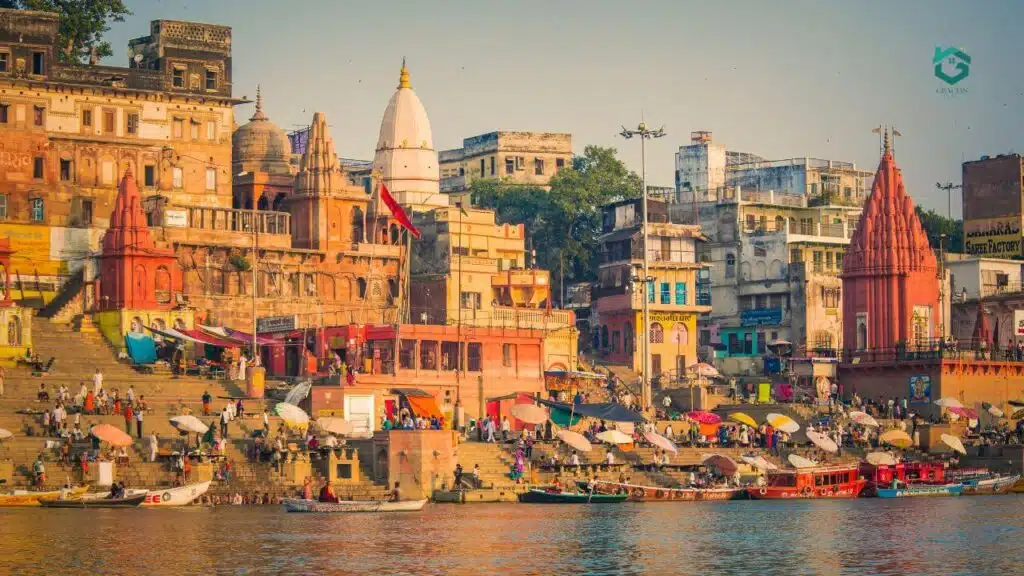
India also offers daily life that feels familiar to many. Home cooked food, festivals like Diwali and Holi, temples, gurudwaras, churches and mosques sit close to most homes. Besides, household help is easy to find. Places like Rishikesh and Varanasi attract retirees who want a spiritual routine.
Should you live on your own or in a senior care home?
It depends on your health and your support network. Generally, healthy, independent retirees with family nearby do well at home. On the other hand, seniors who need daily help, or whose children live abroad, often find a senior care home easier to manage. Services vary by type: independent retirement communities offer housing and amenities, while assisted living homes add nursing and daily care.
| Question | Living at home | Senior care home |
|---|---|---|
| Who helps every day? | Family and staff you hire and manage | A care team, based on the home’s staffing and care plan |
| What happens in an emergency at night? | Depends on who is home at night | Night staff on duty in assisted living homes |
| How does family abroad stay informed? | Calls and visits the family arranges | Updates from the care team, as the home offers |
| Who handles the household? | You or your family | The care home |
| Who will your parent talk to all day? | Family, neighbours, staff and visitors | Fellow residents and the care team |
Still unsure? Our guide on senior care in Gurgaon for NRI parents walks through the decision step by step.
What should you check before you retire to India?
Sort out paperwork, health and housing before you book a flight. Then work through this checklist.
- Confirm your visa route. Apply for OCI first if you qualify.
- Check that your health insurance covers treatment in India.
- Carry your medical records, discharge summaries and prescriptions.
- Pick a city close to family and to a large hospital.
- Keep your OCI card handy. It works as ID for a PAN card, a driving licence and a bank account once you live in India.
- Visit care homes in person, or ask for a video walkthrough.
- Name one local contact person for emergencies.
What does Gracias Living offer retirees and families abroad?
Gracias Living runs care led senior homes in Gurgaon, built for seniors who need daily support. We have cared for seniors for 3 years and served 233+ families. Moreover, many of them live outside India.
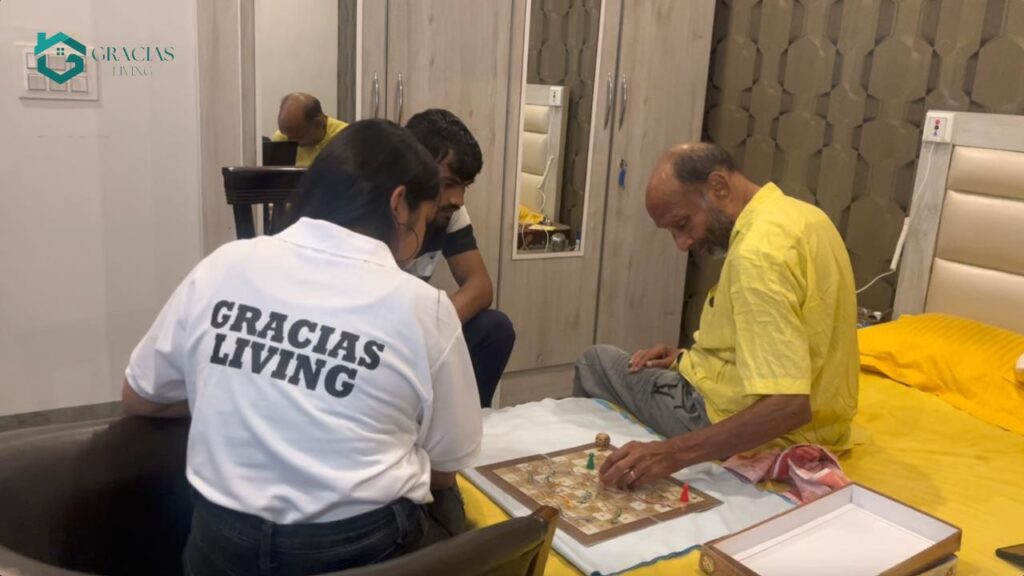
- Two centers in Gurgaon: Blossom in Sector 43 and Zinnia in DLF Phase 3.
- Admission from abroad: fill the admission form online, pay fees online and email the signed agreement. We can send an ambulance to bring your parent in.
- Daily updates: every family gets a WhatsApp group with our nurses and customer experience team. You receive at least one photo or video every day, and vitals records on a shared drive.
- Care on every shift: nurses and caretakers stay on duty day and night, with night rounds.
- Your own doctors: residents keep their treating doctors through video consults and follow ups.
- Rooms for one or two: single and shared rooms, and couples can share a room.
- A full day: cards, carrom, indoor games and evening walks in the park.
- Family visits: family can visit any time after informing the WhatsApp group.
Read how real residents settled in on our Resident Stories page, or see daily routines on Life at Gracias Living. Finally, for the full move, follow our admission guide.
Frequently asked questions
Visa and residency questions
Does India offer a retirement visa?
No. India has no dedicated retirement visa. Foreign retirees usually use an OCI card, an Entry (X) visa or a tourist visa, depending on their Indian connection.
Can a foreigner live in India permanently after retirement?
OCI cardholders can. The OCI card works as a lifelong visa with no limit on length of stay. Foreigners without an Indian link cannot settle on a tourist visa, since it caps stays at 180 days per calendar year.
How long can I stay in India on a tourist visa?
On a one year or five year e Visa, each visit lasts up to 90 days for most nationalities, or 180 days for citizens of the US, UK, Canada and Japan. Your total stay on tourist visas cannot cross 180 days in a calendar year.
Do OCI cardholders need to register with the FRRO?
No. OCI cardholders need no FRRO registration for any length of stay. OCI holders who live in India must inform the FRRO by email when they change their permanent address or occupation.
Can my foreign spouse retire with me in India?
Yes. A foreign spouse of an Indian citizen or OCI cardholder can apply for an Entry (X) visa straight away. After two years of registered marriage, they can apply for their own OCI card. Approval depends on documents and clearances, and the first card carries a five year validity.
Care and family questions
Is Gurgaon a good city for retirement?
Gurgaon suits seniors who need strong healthcare. The city has Medanta, Fortis, Max, Paras and Narayana hospitals, and it sits close to Delhi’s international airport, which helps families who fly in often.
Can I arrange my parent’s admission to Gracias Living from abroad?
Yes. You fill the admission form online, pay fees online and email the signed agreement. Gracias Living can send an ambulance to pick up your parent.
How will I know my parent is doing well if I live abroad?
Gracias Living sets up a WhatsApp group for every family. Nurses share medical updates, the customer experience team shares daily news, and you get at least one photo or video every day.
Sources
- Consulate General of India, San Francisco: Tourist Visa
- Embassy of India, Muscat: Visa categories and stay limits
- Ministry of External Affairs: Rights of OCI cardholders
- Embassy of India, Tehran: OCI Services
- Embassy of India, The Hague: Entry (X) Visa
- Government of Assam: Entry (X) visa extension rules
- Consulate General of India, Auckland: OCI for foreign spouses
Planning a parent’s move to Gurgaon from abroad?
Talk to our team. We will walk you through rooms, care and the online admission process.
Chat on WhatsApp Contact us